Camera Free Elder Monitoring: What Memory Platforms Observe
A camera free elder monitoring system observes temporal, spatial and physiological signals without visual capture — presence across zones, duration of rest or movement, deviations in habitual timing, and ambient environmental changes. These are described as discrete, timestamped events logged by distributed sensors: wearable accelerometers, passive infrared (PIR) nodes, door contact switches, bed pressure mats and low-power ultrasonic occupancy detectors. The system’s memory platform correlates these inputs to form a longitudinal record of routine — not a live feed, not a profile, and never a diagnostic inference. This approach respects dignity by design, avoiding the surveillance architecture inherent in camera-based systems while still supporting caregiver awareness and timely escalation.
Presence: Zone Entry and Exit, Not Identity
Presence is recorded as a binary event: entry into or exit from a defined zone (e.g., kitchen, bedroom, hallway), triggered by PIR, ultrasonic or wearable proximity signals. No biometric matching occurs. A smart ring may register movement but does not identify who moved; a wall-mounted node registers occupancy but cannot distinguish between individuals. This aligns with the Health & Wellness line’s strict separation of signal and identity — a principle embedded in firmware architecture and enforced in every factory QC gate.
Routine: Sequence and Timing, Not Intent
Routine emerges from the chronological clustering of presence events over days and weeks — e.g., consistent bathroom visits between 05:45–06:15, or repeated kitchen entries after 19:00. Deviations are flagged only when statistically persistent across multiple cycles, not on single anomalies. The memory platform does not interpret cause: a delayed morning routine may reflect fatigue, medication timing or ambient temperature — all equally valid, none inferred. Firmware logic for this behaviour is configurable per deployment and validated during sampling and lead times.
Night Activity: Duration and Interruption, Not Sleep Stage
Night activity is measured as cumulative movement duration and frequency within sleep hours — derived from wearable motion sensors and bed pressure mats. It does not estimate REM, deep sleep or apnoea events. A prolonged absence from bed triggers an alert only if paired with other contextual signals (e.g., no subsequent kitchen entry, no light activation), and even then, it describes “prolonged unrecorded presence”, not “fall” or “unconsciousness”. This restraint applies equally to the smart ring with charging case and the AI wearables line.
Escalation: Threshold-Based, Not Predictive
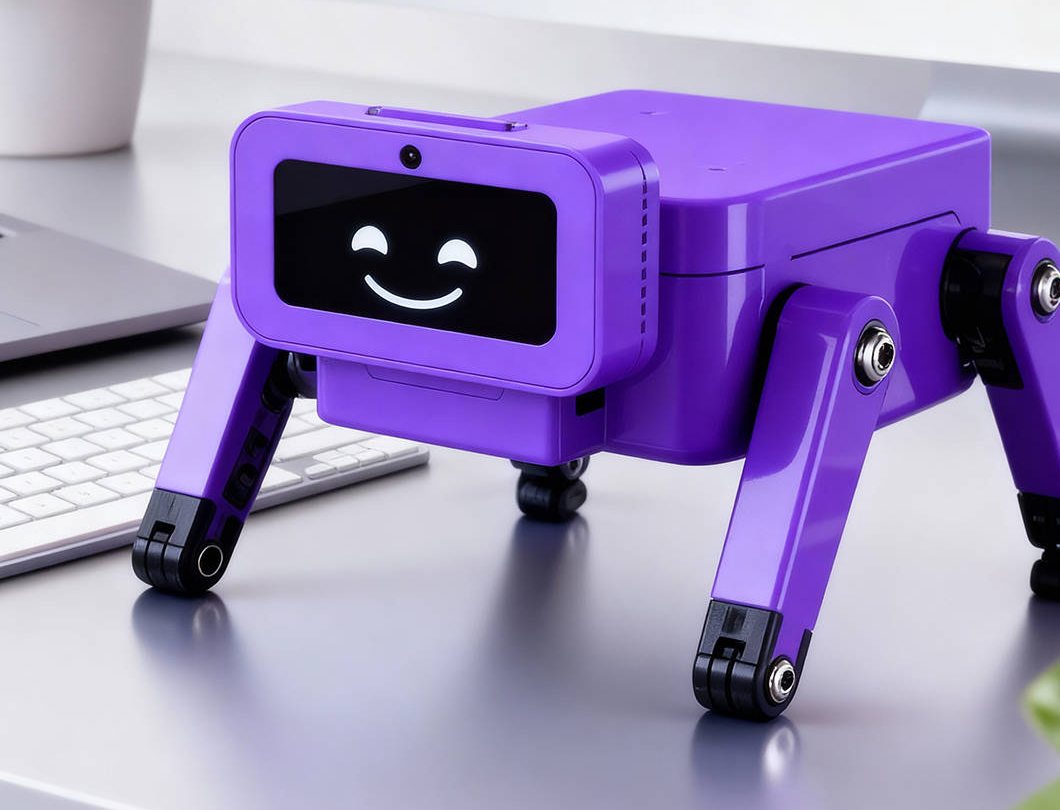
Escalation rules operate on fixed thresholds: e.g., no presence event in the living area for >18 hours, or >3 consecutive nights with >90 minutes of movement outside bed. These are configured during setup and require manual review before forwarding to caregivers. No machine learning model predicts deterioration, risk or need. The companion robot’s role remains strictly reactive and non-monitoring — its product page states this clearly, and its firmware enforces it at runtime.
Dignity: The Hard Boundary
This is where procurement must say no. No WingPhoenix device claims to monitor falls, detect emergencies, infer cognitive decline, assess pain, or replace clinical assessment. No report exists — nor will one be issued — that describes gait instability, urinary urgency, dehydration risk or sleep-disordered breathing. Such claims would violate our published factory policy, contravene EU and UK medical device regulations, and breach the core dignity principle underpinning camera free elder monitoring. If a supplier offers algorithmic “risk scoring”, “behavioural anomaly detection” or “early warning dashboards”, reject it — those outputs require clinical validation, regulatory authorisation and liability coverage we do not hold and do not pursue.
Compliance and Procurement Checklist
| Requirement | What Must Be Supplied Per Hardware Revision | Where to Verify |
|---|---|---|
| CE RED Scope | EN 300 328, EN 301 489, EN 62368-1 test reports | CE RED document checklist |
| RoHS 3 / REACH SVHC | Declaration of Conformity + screening report | Factory handover package |
| Skin Contact Safety | EN 1811 nickel release test summary | Applies to health ring and smart ring builds |
| Battery Compliance | UN38.3 test summary + SDS, watt-hour rating printed on unit | Every battery order, per factory testing process |
| Toy Scope | EN 71-1/-2/-3, EN 62115 test booking confirmed | Age grading on packaging determines scope |
| EMC & Laser Statement | Class 1 laser statement for LiDAR, full EMC report | Required for service robots — see OEM/ODM services |
| Warranty & Spares | 12-month warranty, 2 % free replacement parts shipped with order | Stated in MOQ, sampling and lead times |
- Confirm all sensor nodes meet EN 62368-1 for household use — not industrial grade
- Verify firmware update path supports air-gapped environments if deployed in assisted living facilities
- Require documented risk assessment for any LiDAR-equipped unit, per service robot scope
- Reject any white-label app claiming “health insights” beyond raw signal duration or count
- Validate that night activity logic excludes audio, thermal imaging or camera-derived inputs — even if third-party integrations are offered
Camera free elder monitoring succeeds only when engineering rigour matches ethical constraint. Presence, routine and night activity are observable — escalation is actionable — but dignity is non-negotiable. Before finalising a specification, send us the specification
Questions buyers ask
How does a camera free elder monitoring system detect meaningful change without visual input?
It uses time-stamped sensor events from wearables and environmental nodes to map presence, duration and sequence — not identity or intent. Signals are aggregated into behavioural memory patterns, not real-time video streams.
What compliance checks must an importer verify before placing an order for camera free elder monitoring devices?
Confirm CE RED scope covers the exact hardware revision, check EN 62368-1 and RoHS 3 documentation per build, and validate that any skin-contact item meets EN 1811 nickel release requirements — all supplied per model and revision at factory handover.
Why did our sample fail EMC testing when the datasheet claimed compliance?
Datasheets reflect test conditions for a specific hardware revision; EMC performance shifts with antenna placement, PCB layout and enclosure material. Always book CE RED testing per hardware revision with an accredited lab — see the <a href="https://wingphoenixai.com/resources/ce-red-compliance-smart-watches/">CE RED document checklist</a> for required evidence.
What do most suppliers claim about fall detection that your policy explicitly prohibits?
We do not claim fall detection, monitoring, emergency response or clinical diagnosis in any product — including the <a href="https://wingphoenixai.com/products/health-wellness/r1-ai-health-ring/">health ring</a>, <a href="https://wingphoenixai.com/products/health-wellness/h3-health-smartwatch/">health smartwatch</a> or <a href="https://wingphoenixai.com/products/ai-devices/k1-ai-companion-robot/">companion robot</a>. Health metrics are wellness guidance only.
Related: more on ai health monitoring · buyer guides · customisation tiers