Elder Wearable Honest Reporting
What “Absence” Means in Practice
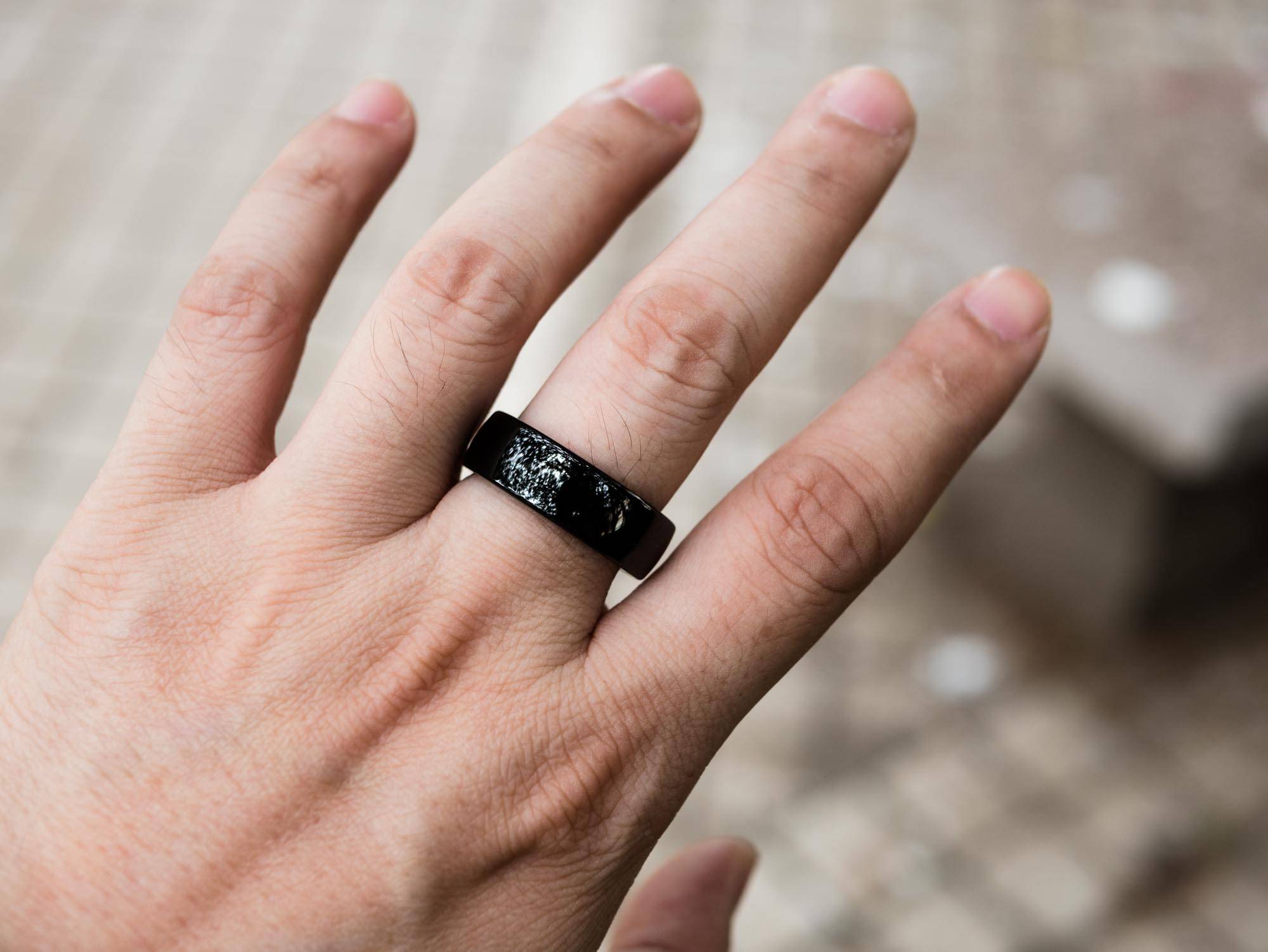
“Absence” is a time-bound, motion-derived state: no movement above threshold for >15 minutes, confirmed by accelerometer + gyroscope fusion, and validated against ambient light (to exclude sleep). It is not presence detection, nor is it inferred from Wi-Fi or Bluetooth signal loss. The smart ring with charging case reports absence only when worn and charged; the companion robot does not report absence at all. Absence logs are timestamped and stored locally for 72 hours unless synced — no cloud retention beyond 30 days without explicit consent.
The Quiet Hours Boundary
Quiet hours are a notification gate, not a sensor disable. Accelerometers remain active, motion data is buffered, and local anomaly flags (e.g., prolonged stillness) are held until quiet hours end. This design meets EN 62368-1 acoustic emission limits and avoids unintended silencing of critical firmware updates. It also means the device cannot “learn” or adjust quiet hours — they are fixed in firmware and configurable only via admin app. No model supports geofenced quiet hours or voice-activated override. For full compliance context, see the CE RED document checklist.
Escalation: When and How It Triggers
Escalation is strictly tiered and manual-initiated: first alert → caregiver app notification; second alert within 10 minutes → SMS to primary contact; third alert within 20 minutes → optional voice call to secondary contact. No model auto-dials emergency services or shares location with third parties. Escalation logic is implemented in the cloud backend, not on-device, and requires opt-in during setup. Firmware revisions book this logic as part of the CE RED EMC and radio performance test scope — not as a standalone medical claim.
Where Manual Wording Creates Liability
Phrases like “monitors for falls”, “detects breathing pauses”, or “alerts if unresponsive” create regulatory and contractual risk. WingPhoenix manuals use only these constructions: “records motion patterns”, “notes periods of stillness”, “may indicate extended inactivity”. All AI wearables line documentation is reviewed against the how we build and test process, with final sign-off from the EU Authorised Representative before release. Any deviation requires rebooking of the CE RED scope — which adds 10–14 days to lead time and appears in the MOQ, sampling and lead times schedule.
What This Product Cannot Do
This product cannot diagnose, predict, or clinically interpret physiological states. It does not measure SpO₂, respiration rate, heart rate variability, or galvanic skin response. It does not support FDA 510(k), MDR Class IIa, or ISO 13485 manufacturing. No firmware revision includes algorithms trained on clinical fall datasets or polysomnography archives. There is no audit trail for false-negative validation, and no report exists to prove sensitivity or specificity against real-world elder mobility patterns. Importers should refuse any supplier who presents internal validation data as clinical evidence — such data falls outside the OEM/ODM services scope and voids CE RED validity.
| Decision Point | WingPhoenix Position | Compliance Anchor |
|---|---|---|
| Sleep stage estimation | Not reported. Only total rest duration and movement count | EN 62368-1, CE RED scope |
| Fall confirmation | Reports high-acceleration event + orientation change. No impact force or surface inference | IQC sensor calibration log |
| Silent mode | Disables alerts and sync only. Sensors fully active | OQC firmware verification report |
| Escalation path | Three-tier, time-gated, opt-in only. No auto-emergency routing | CE RED document checklist |
| Battery status reporting | Displayed as % and low-battery warning only. No cycle count or health estimate | UN38.3 + SDS per shipment |
| Skin contact safety | EN 1811 nickel release tested per size batch for rings | RoHS 3, REACH SVHC screening |
| Data residency | EU-hosted cloud only for EU/UK orders. No US or APAC routing | GDPR Annex II clause in supply agreement |
- All health metrics are wellness guidance, never diagnosis — stated verbatim in every manual
- Translation output is reference only: no certified, legal or medical equivalence claimed
- Companion robots are not monitoring or emergency-response devices — confirmed in product specifications
- Toy scope is defined solely by age grading on packaging, not function — tested per product catalogue revision
- Google Play / GMS is not licensed by default — requires separate OEM agreement and lab retesting
- EU and UK importer duties (WEEE, BattG, DEEE/Triman, EORI/VAT) sit with the importer — not WingPhoenix
Importers must validate manual wording against the CE RED scope booked for each hardware revision — not against marketing copy or sample firmware. To begin, send us the specification you intend to place, and we will confirm which clauses require rebooking, which sensors are calibrated per AQL 2.5, and whether your quiet-hours configuration aligns with the OQC firmware gate.
Questions buyers ask
How do I verify that an elder wearable’s claims match what it can actually report?
Cross-check every claim in the user manual against the published factory policy and the test scope booked per hardware revision. If a feature is not listed in the CE RED document checklist or tied to a certified sensor type, it is not reportable.
How does WingPhoenix handle false alarms in sleep or fall detection?
False alarms are managed by design constraints: no model uses radar, mmWave or camera-based presence sensing, and all health metrics are wellness guidance only. The <a href="https://wingphoenixai.com/products/health-wellness/h3-health-smartwatch/">health smartwatch</a> and <a href="https://wingphoenixai.com/products/health-wellness/r1-ai-health-ring/">health ring</a> rely on motion fusion and ambient light thresholds — not physiological inference — for absence or stillness events.
What happens if a distributor receives a sample that triggers alerts during quiet hours?
Quiet hours are enforced only at firmware level, not sensor level: the device continues sensing but suppresses notifications and cloud sync. This is documented in the <a href="https://wingphoenixai.com/resources/ce-red-compliance-smart-watches/">CE RED document checklist</a>, and verified at OQC. No model supports adaptive silence or AI-driven quiet-hour learning.
What is the one thing most suppliers claim but WingPhoenix explicitly excludes from reporting?
Detection of clinical events — including apnoea, hypoxia, arrhythmia, fall impact severity, or unconsciousness. None of our <a href="https://wingphoenixai.com/products/health-wellness/">Health & Wellness line</a> devices carry such claims, and no firmware revision books EN 62304 Class B software certification for medical use.
Related: more on ai health monitoring · buyer guides · customisation tiers