Buy Humanoid Robot: From Showroom Demo to Purchase Order
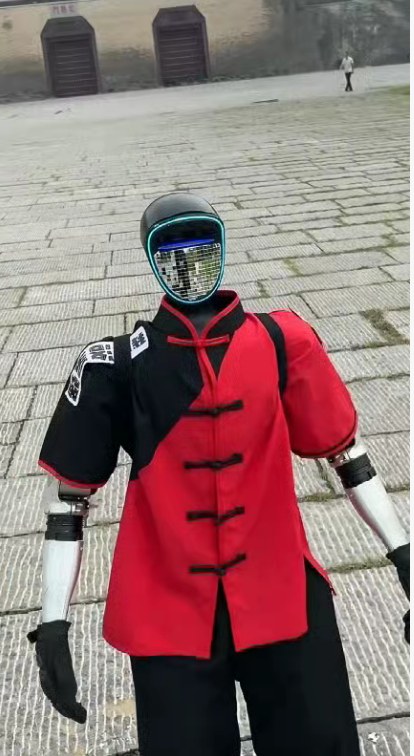
A humanoid robot demo is easy to arrange and tells you almost nothing about whether you can buy the product. What matters is the path behind the demo: who owns the firmware, which documents travel with the hardware revision, and what the supplier will commit to in writing before you raise a purchase order. Buyers who treat the showroom visit as the start of due diligence, rather than the end of it, avoid most of the problems that surface at customs or in the returns queue. This article sets out the gates between a first conversation and a first container.
Gate one: decide what you are actually buying
The word "humanoid" covers a wide range of hardware. A walking platform with articulated limbs is a different procurement object from a desktop companion with a screen and a speaker array. Before you ask for a quotation, fix the category, because it determines the test scope, the importer duties and the retail channel. The AI robots line and the broader AI device line sit in different regulatory conversations, and a buyer who conflates them will request the wrong documents. If your channel is education, the learning robot is governed by the age grading printed on the packaging, which decides whether toy standards apply at all. If your channel is retail gifting or desktop assistance, the companion robot is a wellness and interaction device, not a monitoring or emergency-response product, and your packaging copy must say so.
Gate two: samples, MOQ and the real cost of a pilot
Sample terms are where a supplier's confidence shows. Stock samples ship in 3-5 days; a configured sample takes 7-15 days, and the sample cost is credited against mass production. Ask for the credit in writing on the quotation, not in an email. MOQ is tiered by how much of the product you change: 500 units standard, 500 for logo, 1,000 for custom packaging, 2,000 for firmware or app white-label. Service robot variants are quoted per project from 50 units. The MOQ, sampling and lead times reference is the document to circulate internally before your category review, because it prevents a buyer from promising a launch date that the tooling schedule cannot meet. Production runs 25-35 days, education builds 30-40 days, and ODM tooling takes 12-20 weeks. Plan the pilot around the tooling clock, not the assembly clock.
Gate three: the document set travels with the hardware revision
Compliance is not a company attribute; it is a property of a specific build. When you request CE RED, FCC or UKCA paperwork, ask for the test scope booked against the revision you are buying, with the accredited laboratory named. A certificate issued for an earlier board does not transfer to a new one. The CE RED document checklist is written for wearable hardware but the structure applies here: radio scope, safety scope, battery transport documents, and a clear statement of what was and was not tested. For a service robot, expect an EMC and low-voltage scope, a class 1 laser statement for the LiDAR, and a documented risk assessment. Google Play and GMS are not licensed by default, so if your roadmap assumes the Play Store, raise it before the quotation, not after.
| Gate | What to request | Where it usually stalls |
|---|---|---|
| Category | Written product definition and intended user age grading | Toy scope assumed rather than confirmed |
| Sample | Configured unit, credit note against mass production | Credit promised verbally only |
| MOQ | Tier confirmed for logo, packaging, firmware | White-label quoted at logo MOQ |
| Compliance | Test scope per hardware revision, lab named | Old certificate offered for a new board |
| Battery | UN38.3 summary and SDS, watt-hour rating on unit | Documents not matched to the shipped cell |
| Importer duties | WEEE, BattG, DEEE/Triman, EORI and VAT registration | Buyer assumes the supplier files these |
Gate four: commercial terms and where to say no
Incoterms change your landed cost more than the unit price does. EXW, FOB Shenzhen, and DDP by air or sea are all quotable, and each shifts a different slice of risk. Warranty is 12 months with 2 % free replacement parts shipped with the order; that is a parts allowance, not a service contract, so decide now who handles the end customer. QC runs IQC, IPQC, FQC and OQC at AQL 2.5 major and 4.0 minor, and you should ask to see the inspection record format before you approve the first batch. The factory page explains how builds are tested, which is useful when you write your own incoming inspection plan.
Say no when a supplier quotes a battery product without a datasheet for the revision being quoted, when certification is described as "in progress" but priced as complete, or when EU and UK importer duties are waved away as the supplier's responsibility. Those duties sit with the importer. Say no when white-label firmware is offered below the stated tier, because the engineering hours have to come from somewhere. And say no when a companion robot is pitched as a monitoring device: it is not one, and the claim will not survive a retail compliance review.
Gate five: close the loop before the PO
- Confirm the category, the age grading and the intended channel in writing.
- Order a configured sample and get the credit terms on the quotation.
- Match the MOQ tier to the actual level of customisation you need.
- Request the test scope for the exact hardware revision, with the laboratory named.
- Agree Incoterms, warranty handling and the spare parts allowance.
- Assign WEEE, BattG, DEEE/Triman, EORI and VAT responsibilities to a named party.
A first humanoid order is a documentation exercise with a hardware component attached. If you want a second opinion on scope before you commit, the OEM/ODM services page describes how custom builds are quoted, and the journal carries further procurement notes. Start by writing a one-page product definition and sending it with your sample request; that single document tells a supplier whether you are a buyer or a browser.
Questions buyers ask
What is the minimum order quantity for a humanoid robot?
WingPhoenix quotes a standard MOQ of 500 units for the humanoid platform. Logo printing starts at 500 units, custom packaging at 1,000, and firmware or app white-label at 2,000. Service robot variants are quoted per project from 50 units.
How long does a humanoid robot sample take?
Stock samples ship in 3-5 days; a configured sample takes 7-15 days. Sample cost is credited against mass production, and production runs 25-35 days after sample approval, with ODM tooling at 12-20 weeks.
Related: more on ai robots · buyer guides · customisation tiers