AI Wearable Translator: Where Hardware Earns Its Place
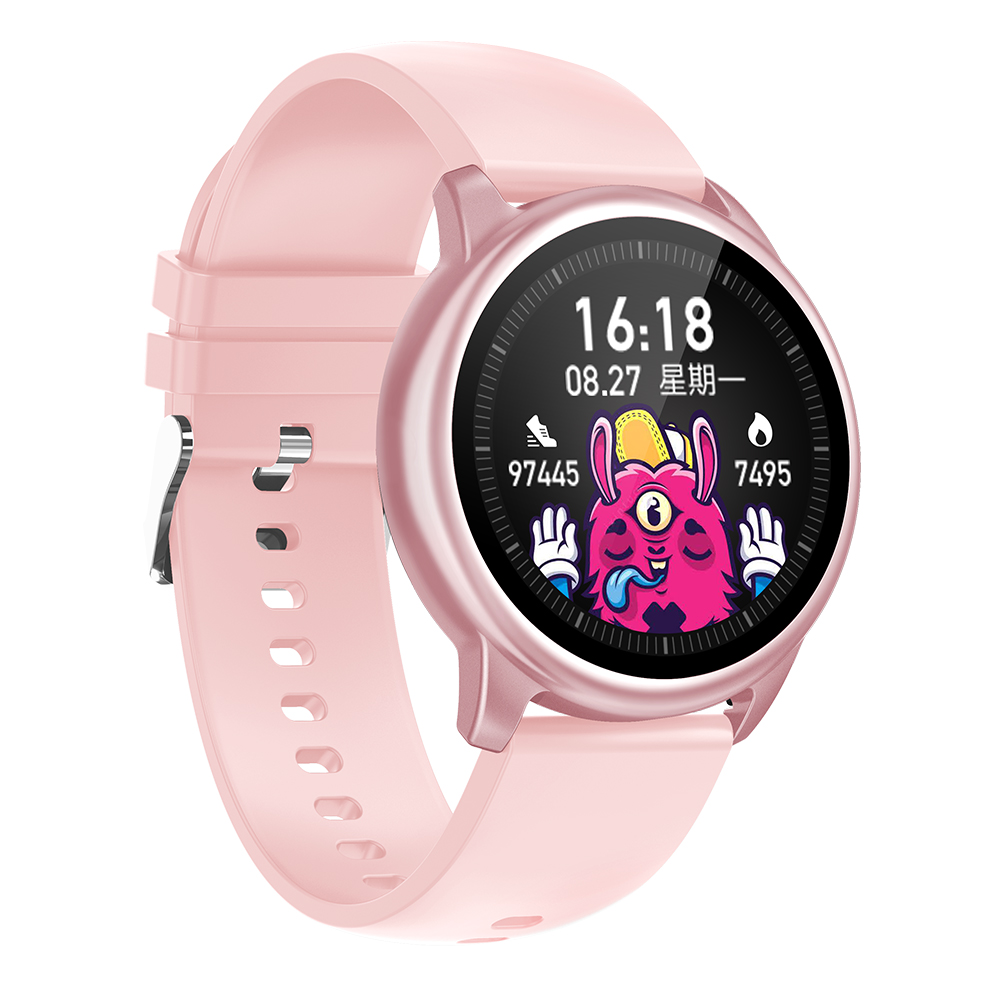
A purchasing manager evaluating AI wearable translators against smartphone-based alternatives must look past feature parity and assess where the hardware itself delivers non-negotiable value: in real-world environments where network dropouts occur, ambient noise disrupts speech capture, and users need uninterrupted operation across shifts or travel days. This is not about replacing phones—it is about specifying where a purpose-built device meets operational requirements that a general-purpose platform cannot sustainably meet. The decision hinges on engineering choices visible in the bill of materials, test scope, and supply chain commitments—not marketing claims.
Mic Array Design Is Not Optional
Smartphone microphones are optimised for voice calls and short-burst commands—not continuous, directional speech pickup in cafés, train stations or factory floors. An AI wearable translator uses a calibrated multi-mic array with beamforming firmware, physically tuned to reject lateral noise and track vocal origin. That tuning is fixed at production and validated per hardware revision in accredited labs. No app update can retrofit this capability. For buyers sourcing the AI wearables line, this means verifying the mic layout and acoustic chamber design in the mechanical drawing package—not just checking “supports speech input” in the spec sheet.
Offline Pairs Are Bound to Hardware Revision
Offline language support is not a toggle in settings. It requires on-device neural models, memory allocation and thermal management baked into the SoC selection. Each offline pair consumes flash space and impacts sustained inference performance—especially under heat. WingPhoenix books offline pair validation as part of the CE RED and FCC Part 15 test scope per hardware revision, not per firmware version. That means the number and combination of offline languages are contractually fixed at mass production sign-off. Buyers should confirm which pairs are included in the CE RED document checklist before finalising the BOM.
Latency Is a System-Level Constraint
End-to-end translation latency below 800ms is achievable only when audio preprocessing, ASR, NMT and TTS pipelines run on a tightly coupled hardware-software stack. Smartphone apps route audio through OS-level audio frameworks, background process schedulers and cloud round-trips—introducing variable delays. A dedicated wearable bypasses those layers. Latency is measured during FQC using reference utterances and logged per unit batch. It is not declared in datasheets but verified in the factory’s IPQC gate, alongside thermal soak tests. This is why health smartwatch and GPS sport watch platforms share the same low-latency audio pipeline architecture: consistency matters more than headline specs.
Battery Autonomy Dictates Use Case Fit
“All-day battery” means different things for different users: eight hours for a tour guide, 16 for a field technician, 48 for a logistics supervisor on rotating shifts. Unlike phones, whose battery life degrades unpredictably with usage patterns, wearable translators are tested for discharge stability under constant audio load—not idle standby. Every battery order carries UN38.3 test summary and SDS, with watt-hour rating printed on each unit. Buyers must align runtime expectations with the MOQ, sampling and lead times policy—battery validation cycles add 7–10 days to IPQC sign-off for new revisions.
| Decision Point | Phone App Limitation | Dedicated Wearable Requirement |
|---|---|---|
| Mic Performance | Single or dual mic, no beamforming firmware | Calibrated 4+ mic array, beamforming enabled at boot |
| Offline Language Support | Variable by app version and OS update | Fixed per hardware revision, validated in CE RED scope |
| Latency Consistency | Dependent on OS scheduler, network, background tasks | Measured per batch in FQC under load, logged in QC report |
| Battery Certification | Certified as part of host device, not traceable per use case | UN38.3 + SDS supplied per order, WHr printed on unit |
| Compliance Scope | Covers phone hardware only; app adds no new obligations | CE RED (EN 300 328, EN 301 489), EN 62368-1, RoHS 3, REACH |
| Importer Duty Responsibility | Handled by phone OEM or carrier | Lies with importer: WEEE, BattG, DEEE/Triman, EORI/VAT |
WingPhoenix does not offer firmware or app white-label below 2,000 units, nor custom packaging below 1,000—because those thresholds reflect the minimum volume needed to amortise lab validation, tooling updates and QC gate retraining. Smaller runs risk inconsistent latency or offline pair behaviour across batches. If your channel requires differentiation without full ODM, consider co-branding within the existing Health & Wellness line or Fitness & Sports line, both of which share the same audio stack and compliance foundation. For deeper integration, OEM/ODM services begin at documented hardware revision level—not API access.
Contact WingPhoenix to request the CE RED test plan for your target language set and review the EN 1811 nickel release report if skin contact is intended. Start with a configured sample—7–15 days lead time—and cross-check latency logs and offline pair loading against your top three use cases before committing to MOQ. All sample costs are credited against mass production orders.
Questions buyers ask
Why specify a dedicated AI wearable translator when smartphones already run translation apps?
Because consistent low-latency output, reliable far-field speech capture in noise, guaranteed offline language pairs and all-day battery autonomy are engineered into the hardware—not layered on top of a general-purpose OS.
What makes an AI wearable translator compliant where a phone app isn’t?
Compliance applies to the physical device: CE RED for radio emissions, EN 62368-1 for safety, RoHS 3 and REACH SVHC screening—all tied to the hardware revision, not the software stack. A phone app inherits its host device’s certifications; a wearable must earn its own.
Related: more on ai wearables · buyer guides · customisation tiers