AI Glasses Tourist Rental: Site-Fitting Test Before Fleet Deployment
What the Pilot Must Validate — Not Just Demonstrate
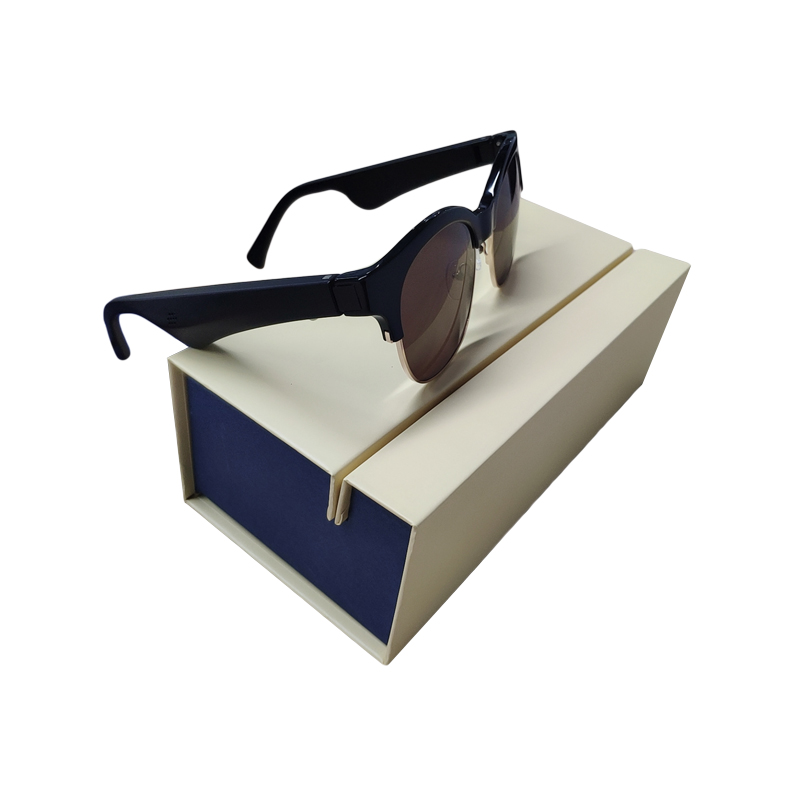
A pilot for AI glasses in tourist rental is not a technology showcase. It is a controlled stress test of human factors, logistics and maintenance rhythm. The venue must record how many visitors require adjustment of nose pads or temple arms, whether audio remains intelligible during guided group movement through low-light galleries, and whether staff can complete cleaning between rentals without exceeding two minutes per unit. This is distinct from testing the translation earbuds, which sit in-ear and face fewer fit variables. The cycling camera glasses share optical and battery architecture but are built for fixed-head motion — not variable visitor posture or extended wear. Fit failure here is physical, not perceptual.Fitness Is Measured in Minutes, Not Millimetres
“Fit” means stable placement for at least 90 minutes of continuous walking, standing and turning — not static head measurement. Visitors wearing prescription frames must be able to mount the glasses without slippage or pressure points. The temple arms must not pinch behind the ears after 20 minutes, and the nose pad must not leave a visible mark on skin after removal. No model in the AI Glasses line carries adjustable nose bridges or interchangeable temple lengths as standard; those require OEM/ODM services and a minimum order of 1,000 units. Stock units ship with one nose pad profile and one temple length. If your pilot shows >15 % of visitors requesting manual repositioning every 12 minutes, the fleet is not fit for scale — regardless of firmware stability.Cleaning Is a Compliance Gate, Not a Convenience
Every rental unit must be wiped down with alcohol-free, non-abrasive cloth before reuse — no exceptions. The device surface must pass EN 1811 nickel release testing for skin contact, and the cleaning agent must not degrade the anti-reflective coating or silicone nose pad. Staff must validate this process using a timed checklist: wipe lenses, temple arms, nose pad and earpiece contact zone, then verify audio output and button response. This cannot be rushed: if cleaning takes longer than 110 seconds per unit during peak flow, the duty cycle collapses. Battery life is rated per hardware revision and tested under EN 62368-1 — but real-world recharge frequency depends entirely on how often cleaning interrupts usage. That data belongs in your pilot report, not in marketing claims.Deposit Handling Reveals Operational Readiness
The deposit mechanism must be auditable, reversible and staff-independent. A paper receipt or verbal promise is insufficient. Your system must log deposit amount, time of collection, time of return and reason for retention (e.g., broken temple, missing charger). If more than 7 % of deposits are withheld for physical damage outside normal wear — or if returns take longer than 48 hours to process — the fleet size must be reduced until staff training and packaging improvements are verified. This is not about trust; it is about traceability. WingPhoenix does not supply deposit software, nor does it host payment infrastructure — those remain your responsibility per local consumer law in Germany, the UK or Canada.Duty Cycle Is Defined by Battery, Not Belief
Battery endurance is published per hardware revision only after UN38.3 and EN 62368-1 testing. No datasheet states “all-day use” — only watt-hour rating, charge cycles and thermal cut-off thresholds. In your pilot, log every charge event: time plugged in, time unplugged, state of charge at start and end, and number of rentals completed between charges. If units consistently fall below 25 % charge before completing four full tours, the duty cycle is broken. Do not assume firmware optimisation will resolve this. Thermal throttling, sensor calibration drift or Bluetooth handshake overhead may be the root cause — and those require lab-level diagnostics, not app updates. Refer to how we build and test for the exact QC gates applied to each revision.What This Pilot Cannot Prove — And Where to Say No
This pilot cannot validate medical-grade audio fidelity, fall detection, or real-time language translation accuracy across dialects. It does not assess GDPR-compliant voice data storage, nor does it certify compliance with local museum accessibility mandates beyond EN 300 328 (radio) and EN 62368-1 (safety). If a supplier claims their AI glasses meet DIN SPEC 91379 (German digital accessibility) or BS 8878 (UK web accessibility), request the full test report — not a summary. WingPhoenix supplies CE RED, FCC Part 15 and UKCA documentation per revision, but does not hold or claim conformance to national accessibility specifications unless explicitly booked and paid for as part of an OEM project. Do not accept a supplier’s word on this. Ask for the accredited lab’s certificate number and scope — then verify it directly.| Test Area | Minimum Pilot Evidence Required | Compliance Reference | Supplier Responsibility | Importer Responsibility |
|---|---|---|---|---|
| Fit Stability | 30+ logged fittings showing ≤2 adjustments per visitor over 90 min | EN 62368-1 clause 8.2.2 (mechanical stress) | Supply nose pad and temple specs per revision | Validate against local consumer durability expectations |
| Cleaning Workflow | Staff-completed timed logs for 50+ cleanings, all ≤110 sec | EN 1811 (nickel release), RoHS 3 (cleaning agent compatibility) | Provide validated cleaning guidance per material set | Train staff, retain logs for 24 months |
| Deposit Audit Trail | 100% digital logging of collection, return, retention reason | German BGB §365, UK Consumer Rights Act 2015 | Supply no deposit logic — hardware agnostic | Implement and maintain compliant system |
| Duty Cycle | Battery logs showing ≥4 full rentals per charge across 5 peak days | UN38.3, EN 62368-1 thermal testing | Supply battery SDS and watt-hour rating per unit | Verify charging infrastructure meets IEC 62619 |
| Radio Compliance | CE RED certificate number matching hardware revision shipped | EN 300 328, EN 301 489 | Book and pay for lab testing per revision | Hold EU/UK responsible person documentation |
| Age Grading | Age label on packaging matches EN 71-1/-2/-3 scope booked | Toy Safety Directive 2009/48/EC | Book toy testing per build if labelled for under 14s | Ensure label matches local language requirements |
Before placing an order, download the buyer resources pack, review the AI glasses market trends for regional adoption patterns, and confirm your cleaning and deposit systems align with the spec table above. Then send us the specification — including your pilot findings, target deployment date and preferred delivery terms (EXW, FOB Shenzhen or DDP). We will issue a formal quote within 48 hours, referencing your test data and confirming which certifications are booked for your hardware revision.
Questions buyers ask
Why can’t we skip the site-fitting test and deploy AI glasses straight from the box?
Because visitor head shape, eyewear overlap, ambient light, and staff cleaning capacity vary per venue — and no firmware update fixes a poorly secured temple arm or a battery that won’t survive three shifts.
What’s the minimum evidence a venue must produce before scaling beyond 50 units?
A signed log of 30+ consecutive visitor fittings across age and gender, full-cycle cleaning validation with staff, deposit return timing data, and battery charge logs over five days of peak use.
Related: more on ai glasses · buyer guides · customisation tiers