AI Feature Test Checklist for Memory Platforms
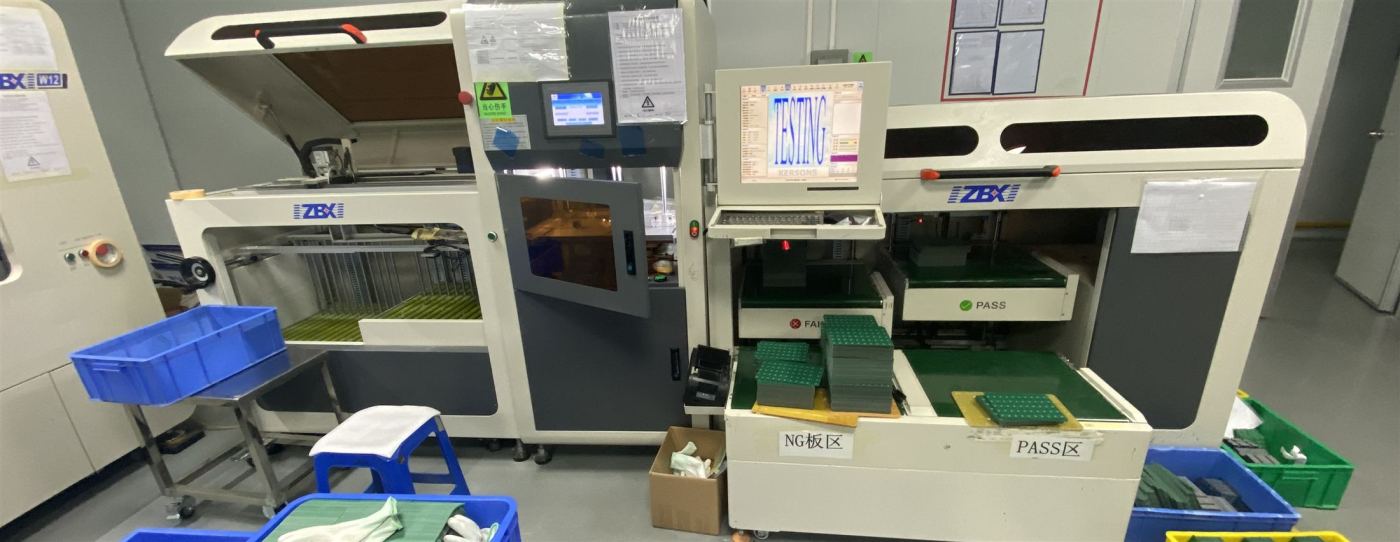
Why Demo Success ≠ Field Stability
A memory feature may respond correctly in a controlled demo: single user, fresh firmware, ambient temperature, no background apps. In home use, it faces variable Wi-Fi latency, intermittent charging, concurrent voice and motion triggers, and repeated session restarts. These conditions expose race conditions in flash wear levelling, cache coherency gaps between edge and cloud layers, and unhandled timeout states. WingPhoenix’s factory testing includes thermal soak (40°C for 48 hours), battery-cycle stress (300 cycles at 20%–90% depth), and network jitter injection — but only if the hardware revision has its EMC and low-voltage scope formally booked with an accredited lab. That booking happens per revision, not per order.Acceptance Testing: The First Gate
Acceptance testing confirms the memory feature behaves as specified in the signed firmware requirements document — not as shown in a video. It must be performed on three units, each subjected to identical sequences: cold boot → 10 sequential memory recalls → 5-minute idle → repeat for 3 sessions. Units must retain context across sessions without manual reset. This gate aligns with WingPhoenix’s IQC stage, where firmware signature and cryptographic key presence are verified before assembly begins. If the feature fails here, no further testing proceeds — and WingPhoenix will reflash or replace at no charge, provided the failure is reproducible and logged per how to vet a supplier.Regression Testing: When New Code Breaks Old Memory
Every firmware update risks corrupting persistent memory structures. Regression testing checks whether a new build preserves existing memory entries, timestamps, and cross-session associations. It requires a baseline set of 20 pre-populated memory records (text, audio snippet, timestamped location) created on the prior version. After flashing, the device must load all 20 without truncation, reordering or silent deletion. This test is mandatory for all white-label firmware orders above 2,000 units and is part of the OEM/ODM services scope. Failure triggers automatic rollback to the last validated build — but only if the customer has stored that build in their own repository, as WingPhoenix does not host or serve prior versions.Field Simulation: Beyond the Lab Bench
True field simulation replicates how users actually interact: fragmented charging (5–15 minute top-ups), mixed language input, Bluetooth audio streaming during recall, and concurrent use of companion apps like the K1 AI Companion Robot or H3 Health Smartwatch. WingPhoenix runs this on 10 units over 72 hours, logging every memory access error, timeout, or unexpected reboot. Results feed into the FQC gate. For models falling under toy scope — such as those in the AI Learning & Robotics line — this phase also verifies EN 71-1 mechanical stability during repeated button-press recall sequences.The Rollback Gap: What Is Not Supported
WingPhoenix does not implement automatic firmware or memory-state rollback in any current product, including service robots, smart rings or companion devices. No model retains a shadow copy of prior memory states or firmware binaries. If corruption occurs — for example, due to interrupted OTA update or sudden power loss — the device enters factory-reset mode and clears all persistent memory. This is by design: it avoids exposing inconsistent data states to end users. Distributors should reject any supplier claim of “self-healing memory” unless backed by auditable source code and a published recovery protocol. WingPhoenix’s position is stated plainly in its how we build and test documentation and applies equally to the AI wearables line and product catalogue as a whole.Compliance Alignment: Where Tests Meet Certifications
Memory features must not interfere with radio performance or safety-critical subsystems. Every hardware revision undergoes EMC pre-scan before formal CE RED (EN 300 328, EN 301 489) and FCC Part 15 testing. If memory activity causes spurious emissions above limit, the feature is disabled in that revision until redesigned. Similarly, for skin-contact items like smart rings, EN 1811 nickel release testing applies to the full build — meaning memory-related PCB layout changes affecting plating or shielding require retesting. Battery-powered units carry UN38.3 and SDS documentation with watt-hour rating printed on each unit — no exception for memory-intensive workloads.| Test Stage | Trigger Condition | Pass Criteria | Linked QC Gate | Certification Impact |
|---|---|---|---|---|
| Acceptance | Firmware sign-off | 100% recall success across 3 sessions, no manual reset | IQC | Required before EMC pre-scan |
| Regression | Firmware update submission | All 20 baseline memory records intact and timestamp-accurate | IPQC | Validates EN 62115 software safety clause |
| Thermal Stress | Hardware revision booking | No memory corruption after 48h at 40°C, 300 charge cycles | FQC | Feeds into EN 62368-1 thermal hazard report |
| Network Jitter | Wi-Fi or BLE module change | Zero dropped recall requests under 200ms RTT variance | OQC | Required for CE RED EN 300 328 |
| Toy Interaction | Age grading on packaging | No memory failure during 100x physical button press sequence | FQC | Supports EN 71-1 mechanical compliance |
| Battery Drain | UN38.3 test summary submission | Memory recall must not exceed 15% peak current draw vs idle | OQC | Required for battery SDS accuracy |
Before approving final firmware for production, request the test summary report for your hardware revision — it lists which standards were booked, which gates passed, and whether thermal or EMC rework was required. WingPhoenix issues this within 48 hours of OQC completion. To begin, share your firmware build ID and intended certification path with your account manager, and reference the buyer resources section for template sign-off forms.
Questions buyers ask
How do I verify a memory feature works beyond the lab?
Run the five-stage checklist below before final approval: it maps to WingPhoenix’s documented QC gates and aligns with CE RED, FCC and EN 62115 test scopes booked per hardware revision.
What does finance need to know about test costs and timing?
Sample cost is credited against mass production; configured samples take 7–15 days, and production lead time starts only after firmware sign-off — so delay in test sign-off directly extends delivery.
Why did our last sample pass IQC but fail at distributor QA?
Because memory features often pass static power-on tests but degrade under thermal cycling, concurrent app usage or multi-session recall — all covered in our IPQC and FQC stages at AQL 2.5 major.
What claim do most suppliers avoid answering?
Whether their memory feature supports rollback to a prior stable state when corrupted — WingPhoenix does not implement automatic rollback in any current model, including the <a href="https://wingphoenixai.com/products/ai-robots/">AI Robots line</a> or the <a href="https://wingphoenixai.com/products/learning-robotics/e1-ai-learning-robot/">E1 AI Learning Robot</a>.
Related: more on ai memory platform · buyer guides · customisation tiers