Adaptive Learning Toy Claims: What You Can State Without Evidence
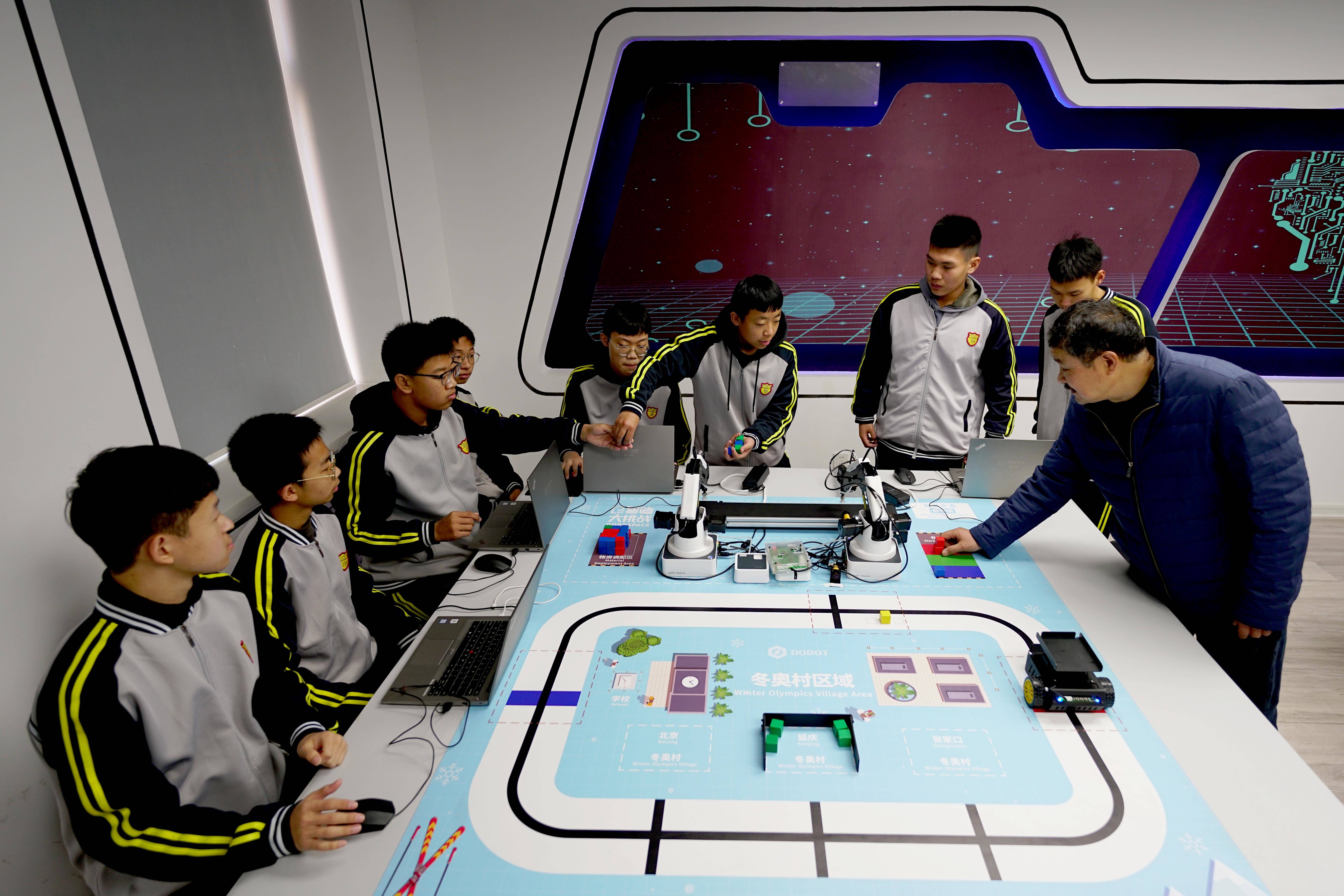
Adaptive learning toy claims must align with the evidence available for each hardware revision and firmware build. Under the EU Toy Safety Directive 2009/48/EC and UKCA framework, any statement suggesting developmental impact, cognitive adaptation or individualised progression requires substantiation — not inference from generic AI capability. WingPhoenix does not generate or commission efficacy studies for its learning robot or other AI toys unless explicitly commissioned by a brand owner as part of an ODM project. Until then, marketing language must reflect only what the device demonstrably does, not what it might imply.
Evidence Thresholds for Personalisation Claims
“Adaptive” and “personalised” are regulated terms in EU consumer law when applied to children’s products. The European Commission’s Guidance on the Unfair Commercial Practices Directive (2005/29/EC) treats unsubstantiated learning claims as misleading if they suggest measurable developmental benefit. A claim like “helps improve reading fluency” triggers the requirement for a clinical or educational study specific to the product’s software logic, audio corpus, feedback loop and age band. WingPhoenix does not hold such studies for its standard AI Learning & Robotics line. Therefore, distributors and brand owners must either commission independent research or revise language before printing packaging or publishing e-commerce copy.
What “Adaptation” Actually Means in Firmware
In practice, most WingPhoenix AI toys use rule-based response trees, pre-recorded phrase banks and simple state tracking (e.g., “user selected Level 3 twice → unlock Level 4”). There is no machine learning model trained on individual usage data, no cloud-based profiling, and no persistent memory across sessions unless explicitly enabled via parental consent and local storage only. This architecture supports responsive, not adaptive, behaviour. Describing this accurately avoids overstatement: “changes responses based on prior selections” is verifiable; “learns how your child thinks” is not.
The Boundary: Where Claims Must Stop
You must refuse supplier language that implies longitudinal development, neural plasticity support, or curriculum alignment without documentation. WingPhoenix cannot provide EN 71-3 migration test reports for firmware logic, nor does it hold ISO 21001 or EC-funded pedagogical validation. If a distributor receives a white-label proposal stating “proven to increase vocabulary retention by 22%”, that claim has no basis in WingPhoenix’s current factory policy or test scope. Such wording should be redlined before sign-off. Refer to our how to vet a supplier guide for due diligence steps on third-party claims.
Safe Alternatives for Packaging and Datasheets
Use active, observable verbs tied directly to interface actions: “recognises spoken numbers”, “repeats phrases with adjustable speed”, “suggests new activities after three correct answers”. Avoid nouns implying agency (“intelligence”, “growth”, “progress”) and adjectives implying proven effect (“effective”, “proven”, “clinically tested”). For the companion robot, describe physical interaction — “turns head toward sound source”, “lights pulse in time with speech rhythm” — rather than attributing intent or empathy.
Compliance Documentation You Will Receive
Each hardware revision carries documented test scopes booked per build with accredited laboratories. These include CE RED (EN 300 328, EN 301 489), EN 62368-1, RoHS 3, REACH SVHC screening and EN 71-1/-2/-3 where applicable. Toy scope is determined solely by the age grading printed on your final packaging and confirmed through lab booking — not by firmware features alone. Battery units include UN38.3 summaries and SDS, with watt-hour ratings printed on each unit. No certificate covers learning efficacy, emotional recognition or long-term engagement metrics.
| Document | Applies to | Tested per | Issued for |
|---|---|---|---|
| CE RED | All wireless models | Hardware revision + antenna layout | Each FCC/RED submission |
| EN 71-1/-2/-3 | Products with age grade ≤14 years | Packaging age band + material batch | Lab booking per run |
| EN 62115 | Battery-powered toys | Cell chemistry + PCB layout | Firmware revision + battery model |
| RoHS 3 / REACH | All components | Material declarations + supplier CoC | Production lot |
| UN38.3 + SDS | Power banks, rings, robots | Cell model + pack configuration | Each battery order |
| EN 1811 | Rings and skin-contact items | Plating process + finish batch | Size kit shipment |
| UKCA | UK-bound shipments | Same scope as CE RED + EN 62368-1 | On request, per revision |
| Laser Class Statement | LiDAR-equipped service robots | Optical output measurement | Per robot model |
- Review all marketing copy against the age grade on final packaging — not the prototype label
- Require firmware version numbers in every claim — “v2.4.1 responds to 12 voice commands” is safer than “responds to voice”
- Use how we build and test to verify which test scopes apply to your revision
- Confirm battery watt-hour rating appears on each unit before shipment — required for CE/UKCA
- Book EN 71-3 migration testing early if using painted plastics or fabric coatings
- Check MOQ, sampling and lead times before committing to custom firmware timelines
- For full customisation, review tiers at OEM/ODM — white-label app changes require MOQ 2,000
WingPhoenix does not make learning efficacy claims for any standard product. If your brand requires substantiated adaptive learning language, you must commission a study aligned with your target market’s regulatory expectations — and share the protocol with us before firmware freeze. To begin that process, send us the specification with your intended age band, language set and interaction flow. We will confirm which hardware revisions support local data retention, offline operation and lab-testable behavioural parameters — and which do not.
Questions buyers ask
Can I claim my AI toy “learns from the child” or “adapts to their skill level”?
Only if a peer-reviewed study exists for that exact model and firmware version. Without it, such claims risk non-compliance under the Toy Safety Directive and mislead consumers.
What language is safe for packaging and datasheets when no study exists?
Describe observable behaviour: “responds to voice prompts”, “offers new dialogue paths after repeated interaction”, or “adjusts game difficulty based on user input timing”. Avoid verbs implying cognition or development.
Related: more on ai toys & dolls · buyer guides · customisation tiers