Shared Elder Monitoring Privacy: Arbitrating Sibling Disputes
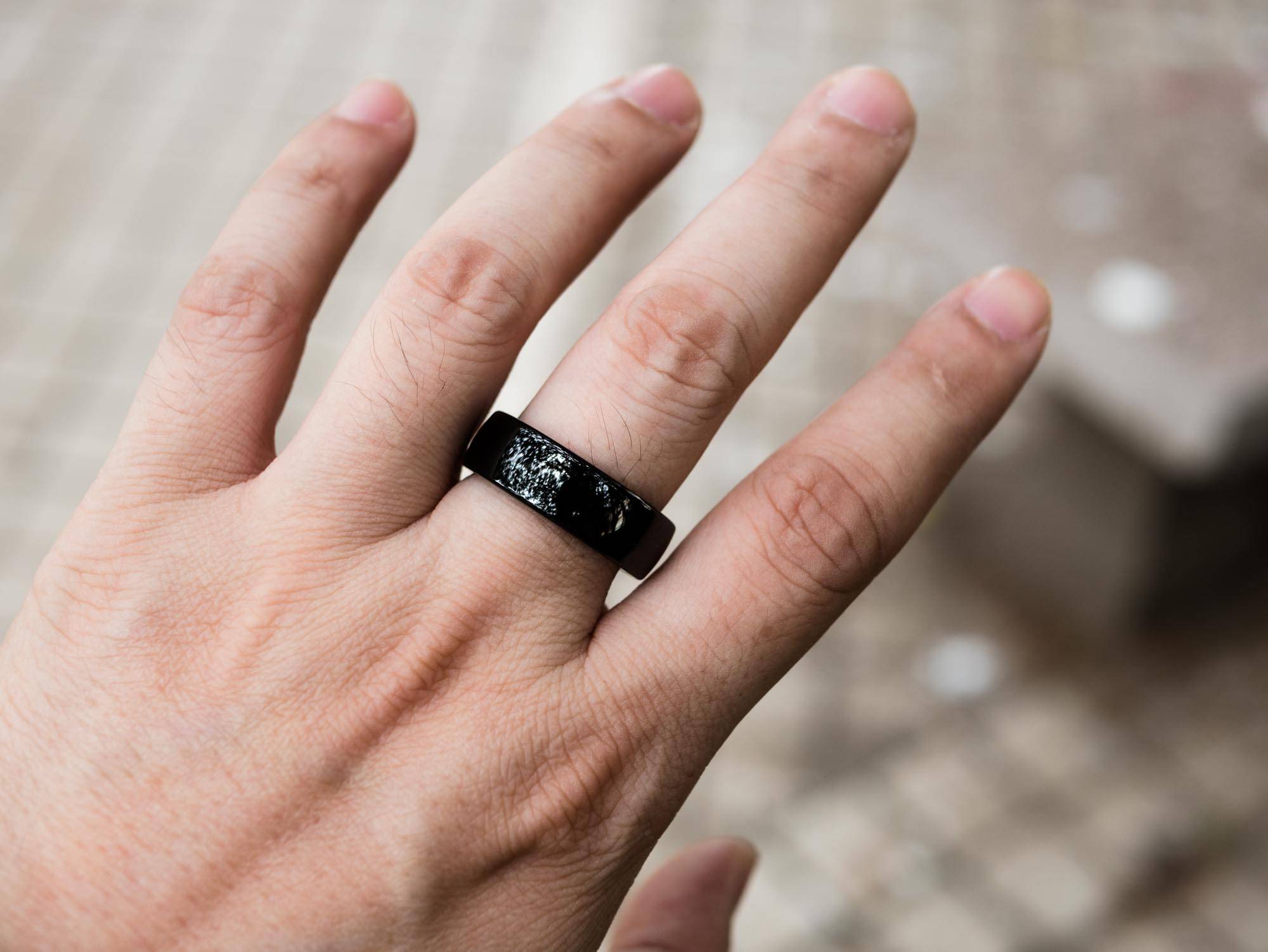
Consent Is Role-Linked, Not Device-Linked
Shared elder monitoring privacy begins at provisioning. WingPhoenix devices do not assume blanket consent across household members. Instead, each caregiver must register separately in the companion app, select a defined role (e.g., “primary contact”, “medical liaison”, “daily support”), and explicitly authorise the specific metrics they may view — step count, resting heart rate, hydration reminders — and for how long. This mirrors the consent model used in the health smartwatch and health ring, where granular permissions are enforced at the application layer, not the sensor level. No firmware update or cloud configuration overrides an individual’s revoked consent.Access Levels Are Enforced at the App Layer
Hardware does not store or interpret relationship hierarchies. Access level control resides entirely in the companion application, which synchronises with the device only after successful authentication and role validation. A sibling designated as “observer only” sees anonymised trend summaries; one granted “alert recipient” status receives push notifications for deviations beyond pre-agreed thresholds. These rules apply uniformly across the Health & Wellness line and extend to the companion robot, though its output remains strictly non-monitoring — it delivers reminders and voice-guided routines, never health data streams. The distinction matters: hardware collects wellness guidance; software governs who sees what, and when.Audit Logs Are User-Initiated, Not Automatic
Every consent grant, modification or revocation triggers a timestamped entry in the app’s audit log — but only after the user confirms the action. No background logging occurs on-device. These logs are exportable as CSV and include user ID, timestamp, action type and affected metric categories. They are not stored on the device itself, nor synced to cloud analytics services. For distributors verifying compliance, this aligns with the CE RED document checklist, which treats radio transmission logs as functional data, not personal data archives. The factory does not generate, retain or certify audit reports beyond what the app produces per end-user session.Dispute Handling Stops Collection, Not Just Sharing
When siblings disagree — for example, one revokes consent for sleep pattern tracking while another maintains it — the device halts collection of that specific metric entirely. It does not continue gathering data “just in case” or buffer it for later release. This follows the principle stated in our published factory policy: health metrics are wellness guidance, never diagnosis. The AI wearables line operates under the same constraint. No model, firmware or cloud service interprets conflict as ambiguity. Ambiguity is treated as absence of agreement — and absence halts ingestion.What This Architecture Cannot Do
It cannot mediate, arbitrate or resolve interpersonal disputes. There is no built-in escalation path, no third-party review module, and no integration with legal or social care services. The system does not infer intent from usage patterns, does not flag “inconsistent consent behaviour”, and does not generate dispute-resolution reports for importers or regulators. That responsibility rests entirely with the family, their legal counsel or appointed care coordinator. Suppliers claiming otherwise — offering “AI-driven consent arbitration” or “automated family agreement enforcement” — are misrepresenting both technical capability and regulatory reality. WingPhoenix makes no such claim, and importers should reject any supplier that does.| Decision Point | WingPhoenix Position | Supplier Red Flag |
|---|---|---|
| Consent revocation | Immediate, irreversible termination of that user’s access to specified metrics | Delayed revocation, cached data retention, or “grace period” before effect |
| Dispute response | Collection pauses for contested metrics; no data buffering or inference | Continued passive collection “for safety”, or AI-assisted reconciliation prompts |
| Audit trail origin | User-initiated, app-generated, exportable CSV only | On-device logging, automatic cloud sync, or certified forensic reports |
| Role definition | Set per user during app registration; no inheritance or group assignment | Predefined family roles (“son”, “daughter”, “carer”) baked into firmware |
| Regulatory scope | CE RED, RoHS 3, REACH SVHC — per hardware revision, tested with accredited labs | Claims of “GDPR-certified hardware” or “HIPAA-compliant sensors” |
| Firmware flexibility | No consent logic embedded in firmware; all rules enforced in app layer | Firmware updates required to change access policies or audit settings |
- Review your distribution agreement for clauses assigning WEEE, BattG or DEEE/Triman duties — these sit with the importer per how we build and test
- Verify that your lab booking for EN 62368-1 includes the exact battery configuration in your order — every power bank and charger carries UN38.3 + SDS with watt-hour rating printed on unit
- Confirm age grading on packaging matches the toy scope you book: EN 71-1/-2/-3 and EN 62115 apply only where the box states an age range
- Request the CE RED test summary for your specific hardware revision — it covers EN 300 328, EN 301 489 and EN 62368-1 as listed in the CE RED document checklist
- Use the MOQ, sampling and lead times page to align sample configuration windows with your internal consent workflow testing schedule
Questions buyers ask
How does the system handle conflicting consent requests from adult siblings?
It requires explicit, separate consent per user role, logs all access events, and blocks data sharing unless all designated caregivers approve the same scope. Revocation by any party terminates that user’s access immediately.
What documentation supports GDPR or UK Data Protection Act alignment?
Each hardware revision carries a CE RED test scope covering radio emissions and EMC, plus RoHS 3 and REACH SVHC screening; full audit trails are app-managed, not embedded in firmware.
What happens if one sibling disables monitoring while another insists it continues?
The device enters a neutral state: no new wellness metrics are collected or transmitted until consensus is re-established via the companion app’s consent workflow.
What is not covered by the current architecture?
There is no automated mediation layer for disputes — no AI inference, no escalation to third parties, and no legal enforcement mechanism. Resolution remains a human-led process outside the device.
Related: more on ai health monitoring · buyer guides · customisation tiers