Kids Tablet with Parental Controls: Why Firmware Beats an App
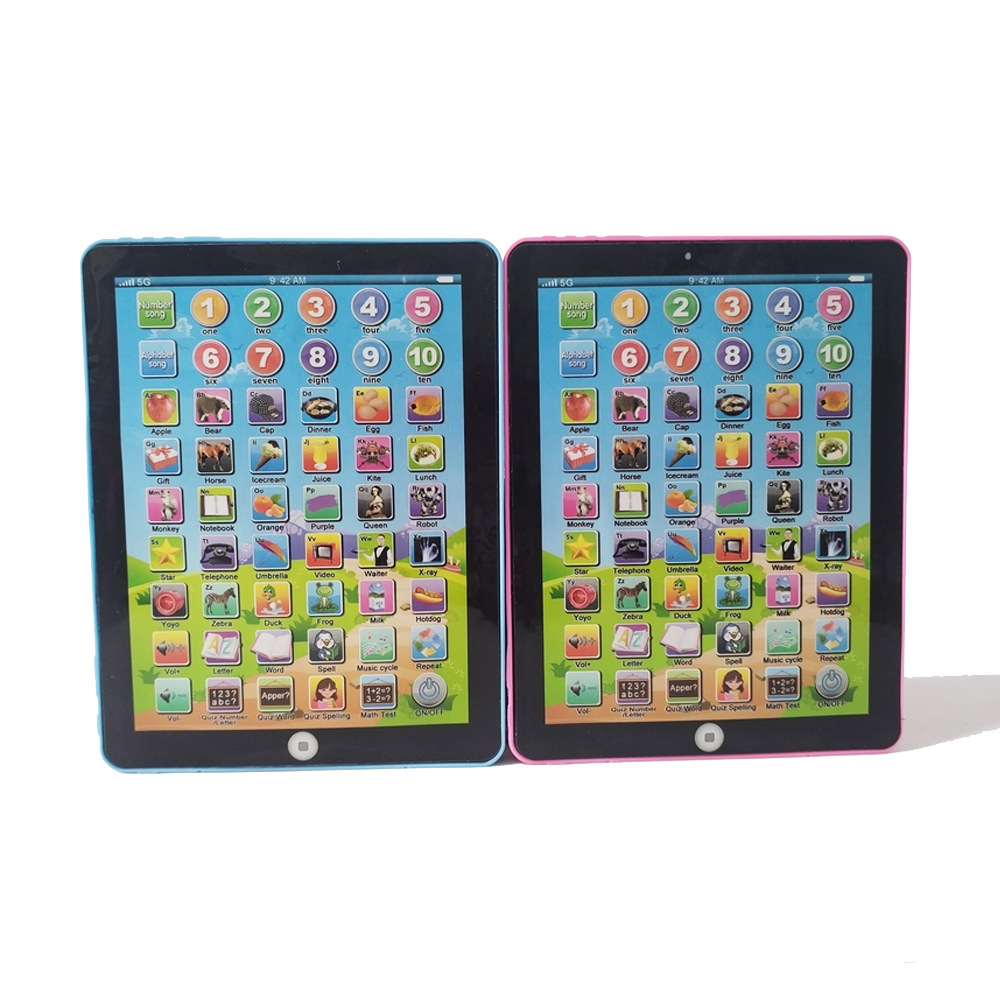
Most parental control features on a learning tablet are shipped as an application, and an application is the weakest possible place to put a policy. A factory reset, a recovery-mode wipe or a reflash of the same firmware image removes it, and the child is left holding a general-purpose Android device. For a European buyer this is not a software question, it is a procurement question: what is the device's behaviour when the user has full physical access and no account? The answer determines whether you are selling a managed learning device or a tablet with a removable restriction. This article sets out the difference between an app and a firmware policy, and the checks that belong in your supplier agreement.
App-level control and firmware-level control are different products
An app-level control runs above the operating system. It can be uninstalled, its data can be cleared, and its permissions can be revoked from settings. A firmware-level policy is part of the image that the device boots into. It can define which launcher starts, which packages are installable, whether developer options and sideloading are available, and what the device looks like immediately after a reset. The practical test is simple: reset the unit, do not sign in to any account, and observe. If the setup flow does not ask for a guardian credential before granting access, the control is not a policy.
This distinction also affects your support burden. App-level controls generate tickets about reinstallation and version drift. Firmware-level controls generate tickets about locked devices and forgotten credentials, which is a different problem with a different fix. Decide which ticket queue you want before you brief the factory.
What to specify in the firmware policy
The specification should be written as device states, not features. Ask for a documented description of the first-boot state, the post-reset state, the recovery state and the update state. Each of these is a place where a control can leak. The learning pad format is a useful reference point because the hardware is fixed and the policy can be tested repeatably across a production batch.
- First boot: which launcher starts, and whether a guardian credential is created before any content is reachable.
- Post-reset: whether the policy is restored from the image or from the cloud, and what happens offline.
- Installability: whether sideloading, developer options and unknown sources are disabled in the image.
- Screen time: whether limits are enforced by the system service or by a user-space app that can be stopped.
- Updates: who signs the update package, and whether a failed update leaves the policy intact.
- Recovery: whether recovery mode can be entered without a credential, and what it can write.
Screen time is a policy, not a setting
Screen time is where app-level designs fail most visibly. If the limit is enforced by a foreground service, stopping the service or clearing its data removes the limit. If it is enforced by the system, the limit survives, but it also becomes harder to change and harder to support. Buyers should decide which of the two they are selling and say so in the specification, because the factory will otherwise build the cheaper one. A firmware-enforced limit is not automatically better: it must still be editable by the guardian through a documented path, and that path must be described in the user manual you publish under your own brand.
Certification, age grading and the documents you receive
Certification is a test scope booked per hardware revision with an accredited laboratory, not a property of a product family. When a firmware policy changes the radio behaviour, the power profile or the accessory set, ask whether the existing test scope still applies. The CE RED document checklist is a reasonable template for the file you should hold, even for a device that is not a wearable.
| Decision point | What to ask for | Why it matters to the importer |
|---|---|---|
| Policy location | Written description of first-boot and post-reset state | Determines whether the control is a product feature or a removable app |
| Age grading | Confirmed grading printed on packaging | Toy scope under EN 71 and EN 62115 follows the grading, not the marketing copy |
| Radio and safety scope | CE RED, EN 62368-1 test reports per revision | Revision changes can invalidate an existing scope |
| Battery file | UN38.3 report and SDS | Required for air freight and for marketplace listings |
| Update signing | Named signing authority and key custody | An unsigned update path is an open door on every unit shipped |
| Importer duties | WEEE, battery and packaging registration in your name | These sit with the importer, not the factory |
Where to say no
Say no to a supplier who describes parental control as an app you can install later, who cannot show a reset device during the sample stage, or who treats the age grading as a marketing decision rather than a compliance one. Say no to a quotation that omits the importer-side registrations, because those costs do not disappear when they are left out of the price. Say no to a firmware white-label commitment below the published threshold; the OEM versus ODM note explains why the engineering effort behind a policy change is not the same as renaming an application.
The published thresholds are straightforward: MOQ 500 units, logo 500, custom packaging 1,000, firmware or app white-label 2,000, education models 1,000. Samples run 3-5 days from stock and 7-15 days configured, with sample cost credited against mass production. Production is 25-35 days, 30-40 for education builds, and ODM tooling 12-20 weeks. Warranty is 12 months with 2 % free replacement parts shipped with the order, and QC gates run IQC, IPQC, FQC and OQC at AQL 2.5 major and 4.0 minor. The factory page describes how those gates are applied, and the AI Learning & Robotics line shows the formats this policy work applies to.
Before you commit, write a one-page reset test: reset the sample, do not sign in, and record what the device does for the first ten minutes. Send that test, with your target age grading and destination markets, to our specification desk and ask for a written description of the firmware policy on the exact hardware revision you intend to order.
Questions buyers ask
Can an app on a kids tablet survive a factory reset?
No. A factory reset returns the device to the state held in the firmware image, so any control installed as an ordinary application is removed with the user data. If parental control is a procurement requirement, it must be written into the firmware policy and verified on a reset device.
Who is responsible for WEEE and battery registration if we import learning tablets into the EU?
The importer. Registration, reporting and take-back duties under WEEE, the EU Battery Regulation and national packaging schemes sit with the importer of record, not the factory. Budget for them before you agree a landed cost with your finance team.
Related: more on ai learning devices · buyer guides · customisation tiers