Audio Guide Triggering Methods: Beacons, GNSS or Loop
Most tour audio projects fail at the trigger, not the speaker. A buyer comparing quotations will see three mechanisms offered — beacon, satellite geozone and physical loop — and suppliers rarely explain that each one is ruled in or out by the site itself. The trigger decision also drives the bill of materials, the certification scope and the battery budget, so it belongs in the specification before you discuss enclosure colours. This article sets out how each mechanism behaves, where it fails, and what to put in a purchase order.
Beacon triggering: short range, high precision, high maintenance
A beacon broadcasts a short identifier on a low-power radio band. The player listens, matches the identifier to a track, and starts playback. Range is deliberately short, which is the point: two exhibits a metre apart can carry different narration without overlap. The trade-off is infrastructure. Every beacon needs a battery, a mounting decision and a replacement schedule, and in a stone or metal interior the radio shadow can be unpredictable enough that you need a site walk with a received-signal map before committing to positions.
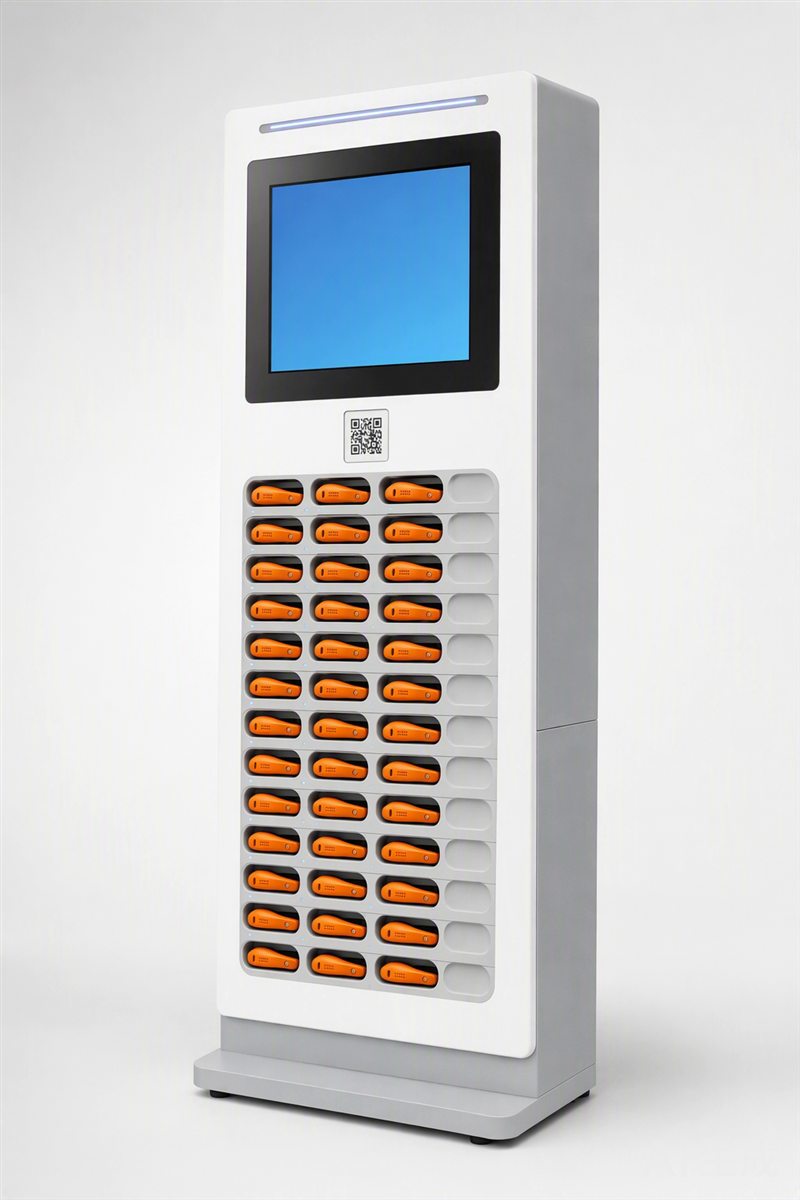
Beacons suit museums, showrooms, factory visitor routes and heritage interiors where GNSS does not reach. They do not suit a route you cannot revisit, because a dead beacon is a silent exhibit. If your business model is rental rather than sale, the rental cabinet approach lets you charge and reconcile handsets per venue, but the beacon estate still needs an owner.
Satellite geozones: no infrastructure, blunt edges
A geozone is a polygon stored on the device. When the receiver's position crosses the boundary, narration starts. There is nothing to install and nothing to maintain, which makes it the default for open-air trails, city walks, coach routes and national park drives. The weakness is accuracy. Under tree cover, between tall buildings or beside a cliff, the position fix drifts, and a drift of a few metres is the difference between narration starting at the viewpoint and starting in the car park.
Design around the weakness rather than pretending it away. Overlapping geozones with a deliberate hysteresis band, a short dwell time before playback begins, and a manual replay button cover most of the failure modes. For routes that mix indoor and outdoor sections, the receiver should fall back to beacon or manual selection inside, which is a firmware arbitration rule you should ask to see demonstrated rather than described. The AI Audio Guides line is built around that mixed-mode assumption.
Physical loop and trigger pads: deterministic, immovable
An induction loop buried in a path, or a trigger pad a visitor steps on, gives a deterministic start with no radio and no satellite. It is the right answer for a fixed installation — a theme park dark ride, a permanent exhibition, a site where you control the groundworks. It is the wrong answer for anything temporary, because the cost sits in civil work rather than in electronics, and moving the route means digging again.
Loop systems also constrain the receiver. The handset needs the matching coil, which adds bulk and cost to every unit you buy, so the economics only work at volume on a single fixed site. If your routes change seasonally, this mechanism should be ruled out in the specification meeting rather than discovered at commissioning.
What to put in the specification and the purchase order
Trigger choice changes the certification and documentation package, because radio and satellite functions fall under different test scopes. Radio-emitting hardware needs a CE RED scope booked with an accredited laboratory per hardware revision, covering the relevant radio, EMC and safety standards; the CE RED document checklist sets out what to request. GNSS-only variants still need EMC and safety scope, and any skin-contact earpiece brings nickel release testing into play.
| Trigger | Ruled in when | Ruled out when | Buyer action |
|---|---|---|---|
| Beacon | Indoor, dense exhibits, controlled access | No one can maintain the beacon estate | Request a site signal survey before tooling |
| GNSS geozone | Open trail, city walk, coach route | Deep canyon, dense urban canopy, indoor | Agree dwell time and hysteresis rules in firmware |
| Induction loop or pad | Permanent installation with groundworks | Route changes seasonally or venue is leased | Cost the civil work, not just the hardware |
| Manual selection | Always, as fallback | Never — keep it on every device | Insist on a keypad or screen path |
| Hybrid arbitration | Mixed indoor and outdoor route | Single-environment site with tight BOM | Ask for a live demonstration, not a datasheet |
Three commercial terms follow from the trigger decision. First, radio variants multiply the SKUs you must certify and stock, so fix the trigger set before committing to a hardware revision. Second, the MOQ, sampling and lead times page shows how configuration choices move sample and production windows — a configured sample takes longer than stock, and ODM tooling runs to a different calendar entirely. Third, if you intend to white-label the app or firmware, the OEM/ODM services route is where trigger logic gets specified, and that threshold sits well above a logo-only order.
Before signing, walk the route with the supplier's engineer and a test unit. Check these points:
- Narration starts at the intended point on a wet day, in leaf cover and with a full crowd, not on a quiet morning.
- The fallback path works: if the trigger fails, the visitor can select the track manually within two taps.
- Battery life is quoted for the worst trigger mode, since continuous listening drains faster than geozone polling at a sensible interval.
- The document pack matches the exact hardware revision you are buying, including the radio scope and battery transport documents.
- Warranty terms and spare parts are stated in the order, not agreed verbally — the standard position is 12 months with 2 % free replacement parts shipped with the order.
- Importer obligations for WEEE, battery take-back and packaging are assigned in writing, because they sit with the importer, not the factory.
Where an importer should say no
Say no to a supplier who quotes a trigger mechanism without asking about your site, and no to a quotation that bundles three radio variants into one certification line. Say no to "GPS works everywhere" and to a beacon plan with no replacement schedule. If the route is a leased venue or a seasonal trail, the honest answer may be manual selection with a good map, which is cheaper and more reliable than infrastructure you cannot maintain. The factory page describes how units are built and gated through IQC, IPQC, FQC and OQC, which is the level of detail worth asking about before you approve a pilot.
Next step
Write a one-page site brief — indoor or outdoor, route length, whether you control the groundworks, who maintains infrastructure, and how many languages you need — then ask for a sample configuration against it. The product catalogue and the buyer resources section give you the hardware and document starting points, and the journal covers adjacent decisions such as receiver choice and rental logistics. Send the site brief with your target volume and we will confirm which trigger set is realistic before any tooling is discussed.
Questions buyers ask
Which triggering method should a buyer specify for a walking tour product?
It depends on the site, not the technology. Dense indoor routes with metal and stone favour beacons, open outdoor trails favour GNSS geozones, and fixed installations favour a physical loop or trigger pad. Most failed projects picked the trigger before surveying the venue.
Can one device support all three trigger types?
Yes, if the firmware is written to arbitrate between them rather than run them independently. The commercial question is whether the extra radio and antenna cost is justified by the routes you actually sell, which is a decision to make before tooling rather than after.
Related: more on ai audio guides · buyer guides · customisation tiers