Smart Glasses Charging: Pogo Pins, Case Wear, End-of-Day Habit
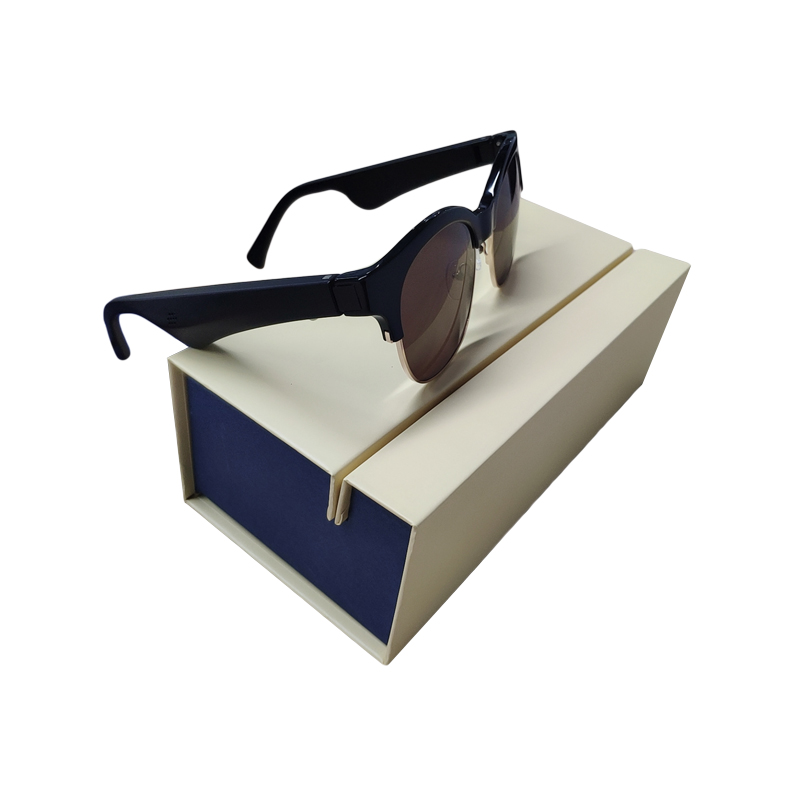
Most returns and one-star reviews on AI glasses do not come from the camera, the audio or the AI features. They come from the last five minutes of the day, when the wearer puts the glasses in the case and expects them to be charged by morning. A case that needs a wiggle, a pin that has gone intermittent after three months, or a lid that no longer seats the temples will undo a good product decision. For a purchasing manager, the charging interface is therefore a specification problem, not an accessory detail.
Why the case, not the glasses, sets satisfaction
The wearer interacts with the glasses during the day and with the case every night. That asymmetry means contact reliability is tested far more often than any other mechanical feature. A hinge is cycled when the user folds the glasses; a pogo pin pair is cycled every single charge, plus every partial charge, plus every time the glasses are dropped in without looking. Buyers who treat the case as a low-cost accessory and source it separately from the glasses usually discover the mismatch at the returns stage, when the two halves of the system have never been tested together.
This is also where the daily habit forms. If charging is effortless, the glasses go back in the case by reflex and the product earns its place. If it is fiddly, the glasses end up on a desk and the battery is flat when the user wants to leave. The same logic applies across the range, from AI glasses to cycling camera glasses, where the case is often carried in a jersey pocket and sees more mechanical abuse.
The pogo pin stack: what to write into the specification
A pogo pin is a small spring-loaded contact, and its behaviour depends on the whole stack: barrel, plunger, spring, plating and the mating pad on the glasses. Two suppliers can quote the same pin height and deliver completely different field behaviour. The specification should fix contact force and travel range, not just dimensions, and should state the wipe distance the pin travels across the pad during insertion. Wipe is what clears oxide and skin oils from the contact; without it, a gold pad will still go intermittent in a humid climate.
Plating choice matters for skin-contact items as well. Where the case or the temple tips touch the skin, nickel release is a documented test item under EN 1811, and it belongs in the file alongside the electrical tests. Buyers should ask which parts of the assembly are considered skin-contact and confirm that the supplier has scoped the test accordingly.
Contact wear: the failure modes worth testing for
Most contact failures are mechanical before they are electrical. The list below covers the checks that separate a case designed for daily use from one designed for a datasheet.
- Insertion cycle test on the assembled case, with the glasses fitted, not on loose pins.
- Contact resistance measured before and after the cycle run, at the pad, not at the PCB.
- Drop test with the glasses seated, since the case is what hits the floor.
- Salt mist or sweat exposure on the pads, followed by a resistance check.
- Lid and magnet alignment after repeated closing, checked for seating force.
- Charge detection behaviour when the glasses are inserted at an angle.
The factory runs IQC, IPQC, FQC and OQC at AQL 2.5 major and 4.0 minor, which catches cosmetic and assembly defects but does not by itself prove contact life. That has to be specified as a separate test scope, booked per hardware revision with an accredited laboratory, and repeated whenever the plating, spring or pad geometry changes. The how we build and test page sets out where those gates sit in the line.
Compliance and documents that travel with the case
The case is a battery product in its own right, so the paperwork must cover it as shipped. CE RED with EN 300 328, EN 301 489 and EN 62368-1, FCC Part 15 B/C, RoHS 3 and REACH SVHC screening apply to the assembly; UKCA is available on request. Every battery order carries a UN38.3 test summary and SDS, and the watt-hour rating is printed on each unit. No capacity, wattage or cycle figure is published before a datasheet exists for the revision being quoted, so a buyer comparing quotes should insist on the datasheet for the exact revision rather than a generic family sheet.
| Decision point | What to require in writing | Why it matters at the returns desk |
|---|---|---|
| Pin and pad stack | Contact force, travel, wipe distance, plating on both sides | Intermittent charging is the most common daily-use complaint |
| Cycle test | Assembled-case insertion cycles with resistance before and after | Proves life, not just first-fit function |
| Skin contact | EN 1811 nickel release scope for touching parts | EU and UK market access for wearable items |
| Battery file | UN38.3 summary, SDS, watt-hour marking on each unit | Air freight and customs clearance |
| Radio and safety | CE RED, FCC Part 15 B/C, UKCA on request, per revision | Re-testing is triggered by any change to the case |
| Importer duties | WEEE, BattG, DEEE/Triman registration, EORI and VAT | These sit with the importer, not the factory |
Commercial terms and where to say no
Standard MOQ is 500 units, logo 500, custom packaging 1,000, and firmware or app white-label 2,000. AI glasses start at 300 units, while ring, education and companion models start at 1,000 and service robots are quoted per project from 50 units. Samples ship in 3-5 days from stock or 7-15 days configured, with sample cost credited against mass production. Production runs 25-35 days, 30-40 for education, and ODM tooling takes 12-20 weeks. Terms are EXW, FOB Shenzhen or DDP by air or sea, with a 12-month warranty and 2 % free replacement parts shipped with the order.
Where an importer should say no: to a supplier who will not state the plating and spring specification, who offers only a bare-pin cycle figure, who cannot produce a datasheet for the exact revision being quoted, or who implies that an existing certificate covers a new case moulding. Those are the points where a cheap case becomes an expensive one. Buyers planning a full range should also check how the case interacts with companion products such as translation earbuds, which may share a travel case or a charging brick.
If the case is being developed alongside a wearable, the same discipline applies to the health smartwatch line, where wellness metrics are guidance rather than diagnosis and the charging contacts see the same daily cycle. The wider AI Glasses line shows how case and glasses are matched at the design stage, and the OEM/ODM services page explains how a custom case is scoped. Background on where the category is heading sits in AI glasses market trends, and further buyer checklists are collected in buyer resources.
The next step is to write the charging interface into your own specification before you ask for quotes: pin stack, wipe, cycle test, skin-contact scope and the document set per revision. Send that specification through send us the specification and we will confirm which items are covered by an existing test scope and which need to be booked with the laboratory for your build.
Questions buyers ask
How should a buyer specify pogo pin charging contacts for AI glasses?
Specify pin material and plating, spring travel, contact force, wipe distance on insertion, and a cycle test on the assembled case rather than on bare pins. Ask for the test scope in writing per hardware revision, because a plating change alone invalidates previous results.
Does a charging case affect certification?
Yes. The case contains the battery and charging circuit, so CE RED, FCC Part 15, UN38.3 and the safety file must cover the case as shipped, not just the glasses. Any change to the cell, the charging current or the case moulding is a new revision for test purposes.
Related: more on ai glasses · buyer guides · customisation tiers