Smart Glasses Camera Indicator: What EU Retailers Need
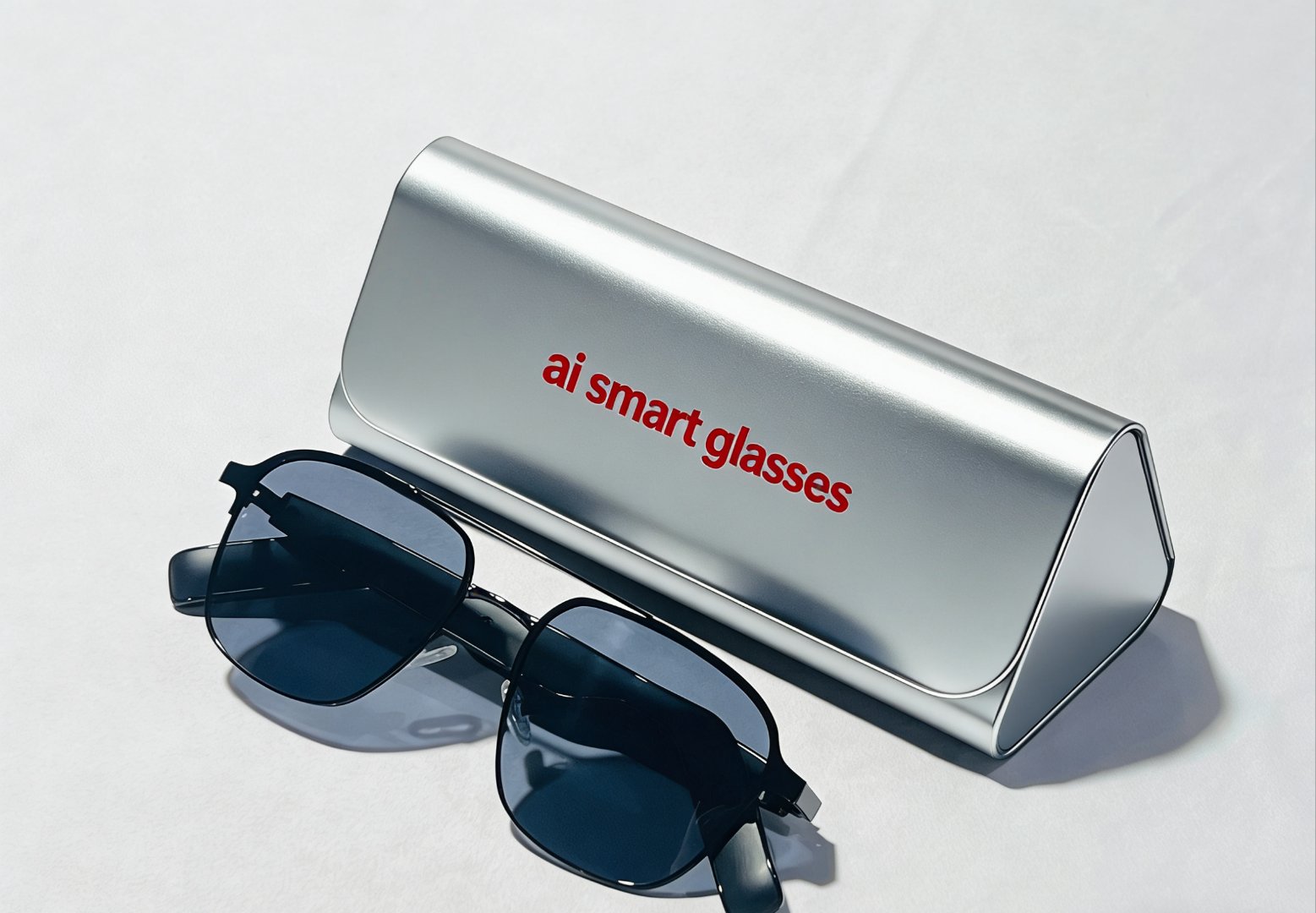
A camera on a spectacle frame changes the retail conversation. The same product can be a useful capture tool or a liability, and the difference is rarely the sensor. It is the recording indicator, the language on the box, and whether the compliance file matches the hardware revision you actually ship. For an EU or UK buyer, these are the design features that decide whether a listing goes live or stalls in legal review. This article sets out what to specify, what to test, and where to walk away from a supplier.
Start with the indicator, not the camera
A recording light should be hardware-linked to the capture state, not drawn by an app. If the LED is software-controlled, a firmware change can disable it, and a reviewer who discovers that will treat the whole product as privacy-hostile. Ask for the behaviour table: which states illuminate the LED, what colour, whether it pulses or stays solid, and what happens during audio-only capture. A single white LED that is unambiguous in daylight and still visible in low light is easier to defend than a subtle tint that shoppers cannot see. This is the kind of detail that separates a sellable AI glasses SKU from a returns problem.
Decide early whether the indicator is a legal requirement in your market or a voluntary trust feature. In most of Europe it is the latter, but retail compliance teams increasingly treat a visible indicator as a condition of listing. Put the requirement in the specification document rather than in an email, because it will be checked against the golden sample at inspection.
Documentation that matches the hardware revision
Certification is a test scope booked per hardware revision with an accredited laboratory, not a permanent badge. If the frame, antenna, battery or LED board changes, the scope may need to be re-booked. Your supplier should be able to tell you which revision each report covers, and whether the LED circuit is inside that scope. Documents supplied per model and hardware revision typically include CE RED (EN 300 328, EN 301 489, EN 62368-1), FCC Part 15 B/C, UKCA on request, RoHS 3, REACH SVHC screening, battery UN38.3 with SDS, and EN 1811 nickel release for skin-contact items. Toy scope (EN 71-1/-2/-3, EN 62115, Toy Safety Directive 2009/48/EC) is decided by the age grading printed on the packaging and booked separately. If a supplier offers you a certificate without a revision number, treat it as marketing material.
| Checkpoint | What to ask for | Why it matters at retail |
|---|---|---|
| Indicator behaviour | State table: capture, standby, charging, audio-only | Reviewers test the obvious states first |
| Hardware linkage | Confirmation the LED is not app-controlled | Prevents a firmware change disabling it |
| Revision control | Report number tied to frame and LED board revision | Avoids a stale certificate at customs |
| Manual wording | Localised privacy and bystander notice text | Reduces complaint volume and returns |
| Packaging claims | No covert-recording or surveillance language | Marketplaces remove listings on wording alone |
| Importer duties | WEEE, BattG, DEEE/Triman registration path | Duties sit with the importer, not the factory |
Where an importer should say no
Walk away when the supplier cannot describe the LED circuit, when the only privacy document is a marketing PDF, or when the sample you receive has a different indicator behaviour from the one in the specification. Also decline when the supplier offers to ship without a manual in your language, or suggests that importer registrations are their responsibility. They are not: EU and UK importer duties sit with you. If you are comparing form factors, the same discipline applies across the AI Glasses line and to adjacent categories such as translation earbuds, where audio capture raises parallel questions.
Set your own internal checklist before the first call:
- Write the indicator behaviour into the specification and reference it in the purchase order.
- Request the report list per hardware revision, with lab names and scope.
- Confirm the age grading on the packaging and whether toy scope applies.
- Agree manual languages and bystander notice wording before tooling.
- Confirm which importer registrations you will hold.
- Book samples against the production revision, not an early prototype.
Commercial terms and the sample loop
Standard minimum order quantity is 500 units, with logo at 500, custom packaging at 1,000 and firmware or app white-label at 2,000. AI glasses sit at 300 units, while ring, education and companion models are 1,000 and service robots are quoted per project from 50 units. Stock samples ship in 3-5 days and configured samples in 7-15 days, with sample cost credited against mass production. Production runs 25-35 days, education 30-40 days, and ODM tooling 12-20 weeks. Terms are EXW, FOB Shenzhen, or DDP by air or sea. Warranty is 12 months with 2 % free replacement parts shipped with the order, and QC gates run IQC, IPQC, FQC and OQC at AQL 2.5 major and 4.0 minor. You can review the process on our factory page and the wider range in the product catalogue.
Two adjacent points are worth flagging for buyers building a category plan. Health metrics on wearable devices are wellness guidance, never diagnosis, so avoid clinical claims in your listing copy. Translation output is a reference translation, not a certified, legal or medical service. A companion robot is not a monitoring or emergency-response device. Google Play and GMS are not licensed by default, which affects app strategy on any Android-based frame. Background reading sits in our AI glasses market trends note and the buyer resources section.
The practical next step is to draft a one-page indicator and documentation requirement, then send it with your target market and volume so the revision scope and sample timing can be confirmed in writing. You can send us the specification and we will reply with the report list that applies to the build you are considering.
Questions buyers ask
Does a recording light actually satisfy EU privacy expectations?
It is not a legal certification, but a visible, hardware-linked indicator is what retail compliance teams and consumer advocates look for first. Pair it with honest packaging language and a clear LED behaviour table in the manual.
Who is liable if a shopper complains about covert recording?
Under EU and UK rules the importer carries WEEE, BattG, DEEE/Triman, EORI and VAT duties, and in practice also handles consumer-facing privacy complaints. That is why the indicator design and its documentation should be settled before you place a purchase order.
Related: more on ai glasses · buyer guides · customisation tiers