AI Glasses for Blind: What the Hardware Actually Does
What the Cameras See — and What They Don’t
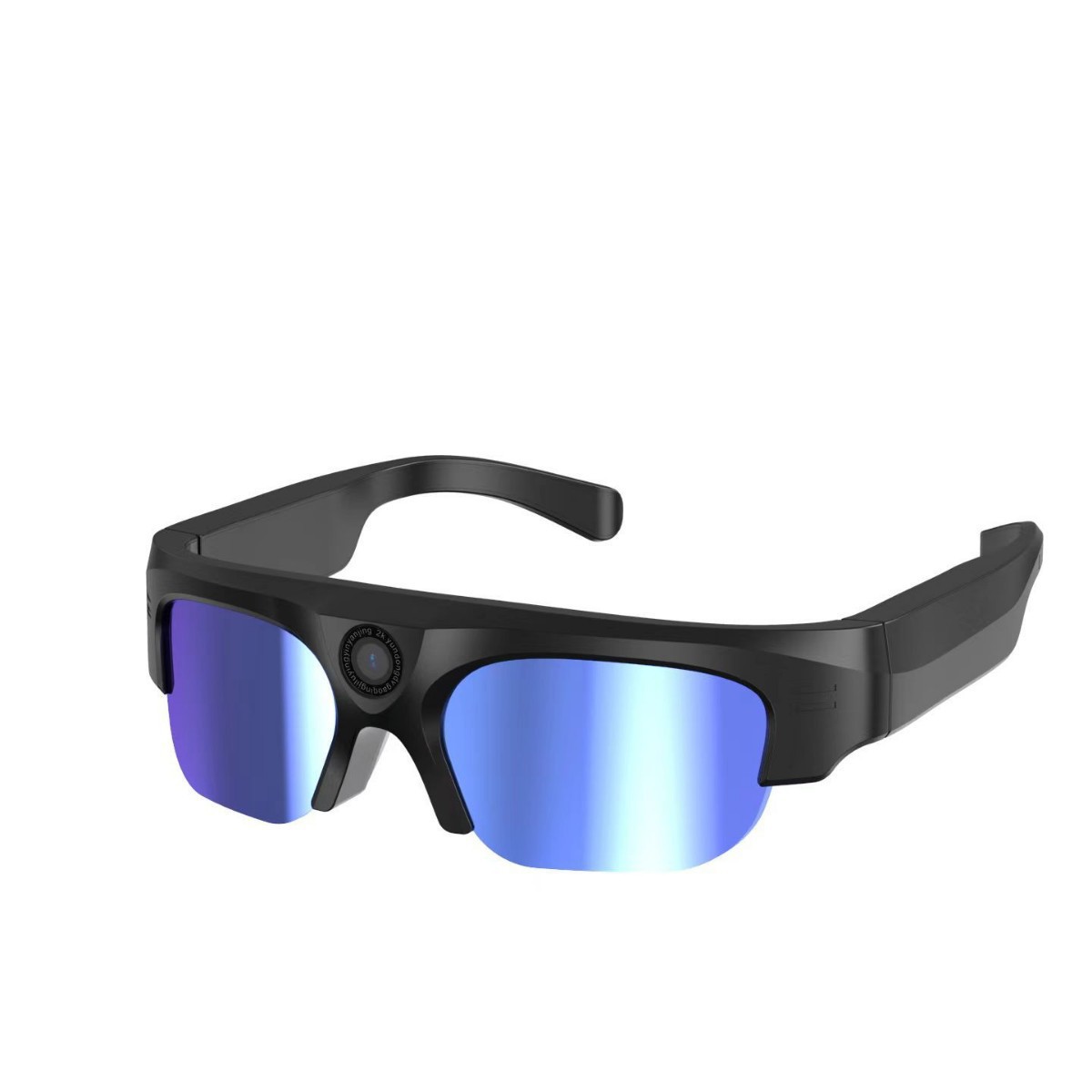
The Vox One AI Glasses use two fixed-focus 12 MP CMOS sensors with f/2.0 aperture and 82° field of view. They feed frames at 15 fps to a dual-core NPU running quantised vision models trained on publicly licensed datasets. Recognition covers common objects (doors, stairs, chairs), traffic signals, currency notes, and printed text in 32 languages. They do not detect facial expressions, interpret emotional states, identify individuals, or recognise unlabelled custom objects without cloud-based fine-tuning — which WingPhoenix does not enable on-device. No video stream leaves the device unless explicitly routed via a white-labelled app configured by the buyer under firmware and app white-label terms.
Audio Output Is Descriptive — Not Diagnostic
Bone-conduction transducers deliver spatialised audio cues without blocking ambient sound. Speech synthesis uses locally cached neural TTS engines with adjustable pitch, speed and language. Audio output describes layout (“door on left, open”), text content (“‘Exit’ in bold blue letters”), and object presence (“person standing ahead”). It does not diagnose medical conditions, infer intent, or assess safety risk — for example, it will not say “step down here is uneven” unless trained on that specific hazard class. This aligns with our published factory policy that health metrics are wellness guidance, never diagnosis.
Where Compliance Begins — and Ends
CE RED certification covers radio emissions, electromagnetic compatibility and electrical safety — not usability, accuracy or assistive efficacy. The CE RED document checklist applies equally to AI glasses: every production batch must match the tested hardware revision, including battery model, antenna layout and shielding. EN 62368-1 requires touch-current testing on all user-contact surfaces; if your lab fails this, cross-check the exact enclosure material lot and coating process against the certified test report. Battery UN38.3 + SDS and nickel release (EN 1811) apply where metal contacts skin — confirmed per build.
What This Hardware Cannot Do
These are not medical devices. They do not monitor gait, detect falls, estimate distance to obstacles beyond 3 m, or interface with emergency services. They cannot read handwritten text reliably, interpret braille, or function offline in low-light conditions below 10 lux. No version supports real-time sign-language translation or eye-tracking input. Claims of “real-time navigation” refer only to path description between known points — not GPS-guided turn-by-turn routing. WingPhoenix does not publish or validate any report on functional vision improvement, cognitive load reduction or long-term user adaptation. Such studies fall outside our scope and are not part of any certification or factory test plan.
Procurement Realities for Distributors
Minimum order quantity for AI glasses is 300 units. Custom firmware or app branding starts at 2,000 units under OEM/ODM terms. Samples ship in 3–5 days if stock-configured; configured samples take 7–15 days and cost is credited against mass production. Production lead time is 25–35 days EXW Shenzhen. QC follows AQL 2.5 major / 4.0 minor across IQC, IPQC, FQC and OQC gates. Warranty is 12 months with 2 % free replacement parts shipped with the order. All documents — including CE RED, FCC Part 15, RoHS 3, REACH SVHC and battery SDS — are supplied per hardware revision, not per SKU.
| Requirement | Verified Per Build? | Test Standard | Document Supplied |
|---|---|---|---|
| Radio emissions & spectrum use | Yes | EN 300 328 | CE RED Declaration of Conformity |
| EMC immunity & emissions | Yes | EN 301 489 | Test report summary |
| Electrical safety | Yes | EN 62368-1 | Full test report + DoC |
| Battery transport safety | Yes | UN38.3 + SDS | SDS + UN38.3 summary, WH rating printed |
| Nickel release (frame contact) | Yes | EN 1811 | Lab certificate per material lot |
| RoHS 3 compliance | Yes | IEC 63000 | DoC + substance declaration |
| REACH SVHC screening | Yes | EC 1907/2006 | SVHC statement per build |
| UKCA marking | On request only | UK Statutory Instrument 2019/1345 | UK DoC + test report summary |
- All certifications are booked per hardware revision — not per model name or marketing variant
- No camera-equipped device carries health, diagnostic or monitoring claims — see H3 Health Smartwatch for contrast
- Text-to-speech works offline; scene description requires initial cloud model download during setup
- Importers retain full responsibility for WEEE, BattG, DEEE/Triman and EORI/VAT obligations
- For service robot builds, expect separate EMC and laser class statements — see K1 AI Companion Robot
- Full product catalogue is available at WingPhoenix AI Products
- Buyer resources, including compliance templates and factory audit summaries, are in the Resources section
The distinction between assistive capability and clinical function matters — both legally and ethically. Before placing an order, confirm your lab has the latest hardware revision number and compare it directly to the CE RED test report. If your distributor requires local-language user manuals, battery labelling or customs declarations, those are handled under white-label terms, not standard supply. To begin verification of a specific build, talk to the sales team with your intended destination market and hardware revision ID.
Questions buyers ask
What core functions do your AI glasses for blind users perform in daily use?
They capture scenes via dual 12 MP cameras, run on-device object, scene and text recognition, and output descriptive audio through bone-conduction earpieces. Text is read aloud with language-agnostic OCR and adjustable speech rate.
How do you ensure these devices meet EU and UK regulatory requirements for assistive eyewear?
Each hardware revision undergoes CE RED testing per EN 300 328 (radio), EN 301 489 (EMC), EN 62368-1 (safety), plus RoHS 3 and REACH SVHC screening. UKCA is available on request; full test reports are issued per build.
A sample failed our lab’s EN 62368-1 touch-current test. What should we check first?
Confirm whether the unit was built to the same hardware revision as the certified test report — minor PCB or enclosure changes invalidate prior certification. All revisions require retesting at an accredited lab.
What do most suppliers falsely claim about AI glasses for blind users?
That they “restore functional vision” or “replace guide dogs”. These are clinical claims unsupported by the hardware. The Vox One AI Glasses are assistive eyewear only — no medical indication, no fall detection, no biometric monitoring.
Related: more on ai glasses & accessibility · buyer guides · customisation tiers